

Simchat Torah is the joyful finale of the fall holiday season — the day the Jewish people finish reading the Torah scroll from the last verse of Deuteronomy and immediately roll it back to the first verse of Genesis to begin again. In 2026, Simchat Torah falls on 3–4 October, right after Sukkot ends. The evening opens with Ma'ariv and moves into Hakafot, seven joyful circuits where the Torah scrolls are carried and danced around the bimah; the next morning brings Shacharit, a full Torah reading in which every congregant present is called for an aliyah, and Musaf. Children wave flags and are handed candy, families dress in their tallit, and the whole community shares cake to mark the day. Below is everything you need — from candle holders and tallit to Torah toys, flags, candy, and festive cakes — plus a full walkthrough of the service itself.
🕯️ Candle Lighting for Simchat Torah
Like every Yom Tov, Simchat Torah begins and ends with candles.
Candles are lit before sunset on the evening Simchat Torah begins, and again after nightfall on the second night from an existing flame, since it is Yom Tov. Many families use this moment to bring out their prettiest holiday candlesticks — something festive rather than the everyday Shabbat pair — to match the joy of the day.
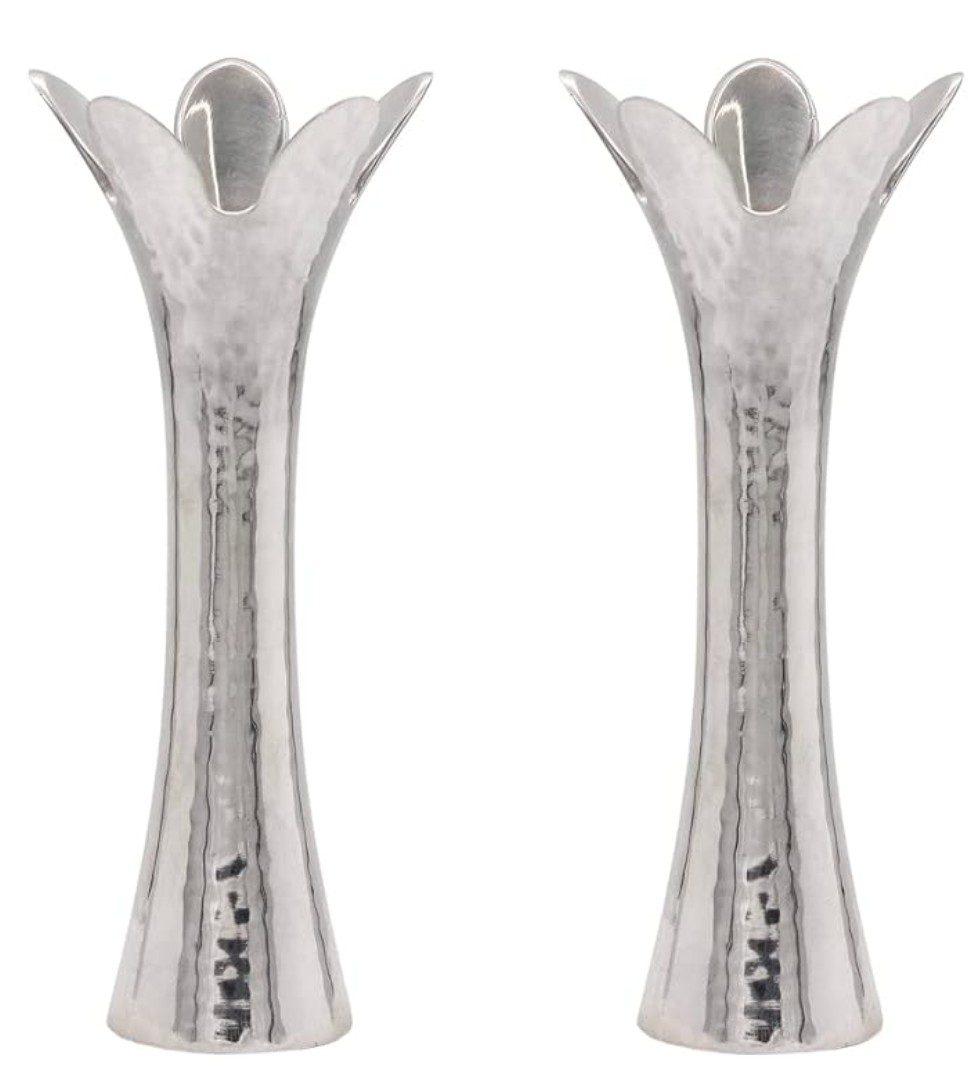
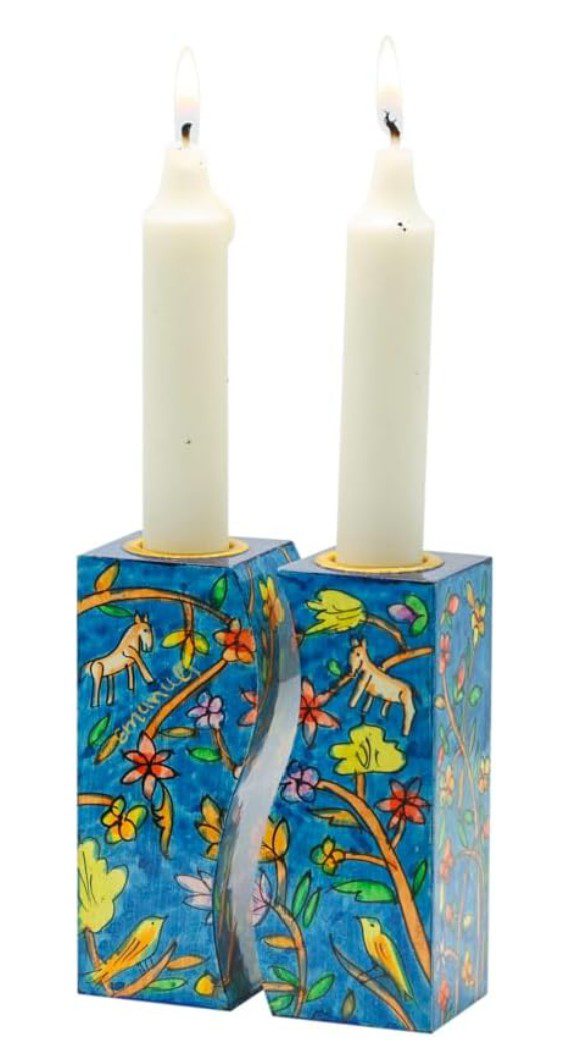
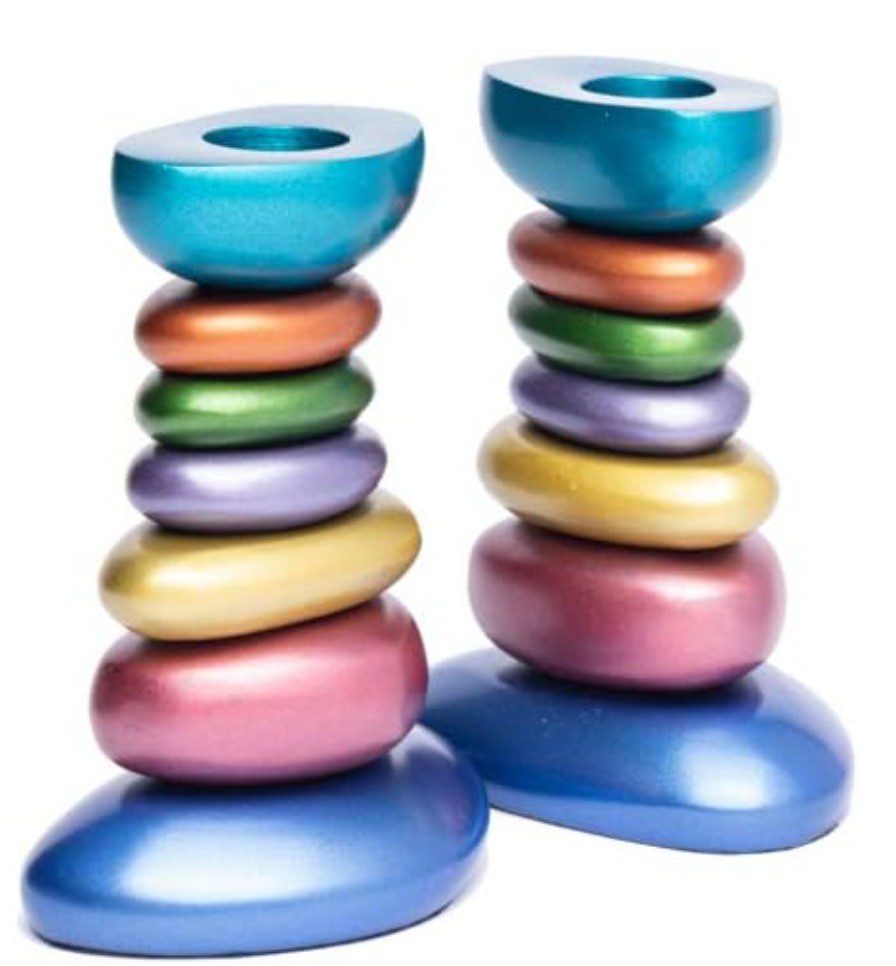
All three are hand-finished Yair Emanuel pieces designed for festival use rather than everyday Shabbat.
🎙️ Simchat Torah Evening — Order of the Service
Led by the cantor (chazzan), who chants the liturgy aloud for the congregation.
The cantor, or chazzan, is the person who leads the congregation in prayer on Simchat Torah — chanting the service aloud, cueing responses, and carrying the festival melodies that make the evening sound distinct from an ordinary weekday.
1. Ma'ariv (Evening Service)
- Barchu
- Shema and its blessings
- Amidah for Yom Tov
- Full Kaddish
2. Hakafot (Seven Processions)
This is the highlight of Simchat Torah.
- All Torah scrolls are removed from the Ark.
- The congregation sings and dances.
- Seven circuits (Hakafot) are made around the bimah.
- Before each Hakafah, special prayers and verses are recited.
- Each Hakafah includes singing, dancing, and celebration.
Common verses include Ata Hareita Lada'at, along with various Psalms and joyful melodies.
3. Returning the Torah Scrolls
The Torah scrolls are returned to the Ark.
4. Aleinu
Concludes the evening service.
☀️ Simchat Torah Morning Service
Shacharit, the Torah reading, and Musaf.
1. Shacharit (Morning Prayer)
- Pesukei Dezimra
- Shema and its blessings
- Amidah
- Hallel (Full Hallel)
- Torah service begins
2. Torah Reading
Unlike any other day of the year, every eligible person present is generally given an aliyah if possible. The reading comes from Deuteronomy (Vezot Haberachah) and is read repeatedly so everyone can be called up.
Chatan Torah — receives the final aliyah of Deuteronomy. The congregation then completes:
"Chazak, Chazak, V'Nitchazek" — "Be strong, be strong, and let us strengthen one another."
Chatan Bereishit — immediately afterward, Genesis begins, without any pause in the yearly cycle:
"Bereishit bara Elokim..." — this symbolizes that Torah study never ends.
Maftir — a separate reading for the festival.
Haftarah — from the Book of Joshua 1:1–18, beginning "After the death of Moses..." — it connects perfectly with finishing the Torah and moving into the next stage of Jewish history.
3. Musaf
- Silent Amidah
- Repetition
- Priestly Blessing (where customary)
- Kaddish
4. Concluding Prayers
- Ein Keloheinu
- Aleinu
- Mourner's Kaddish
🧵 Tallit for Simchat Torah
Worn for the evening and morning services alike.
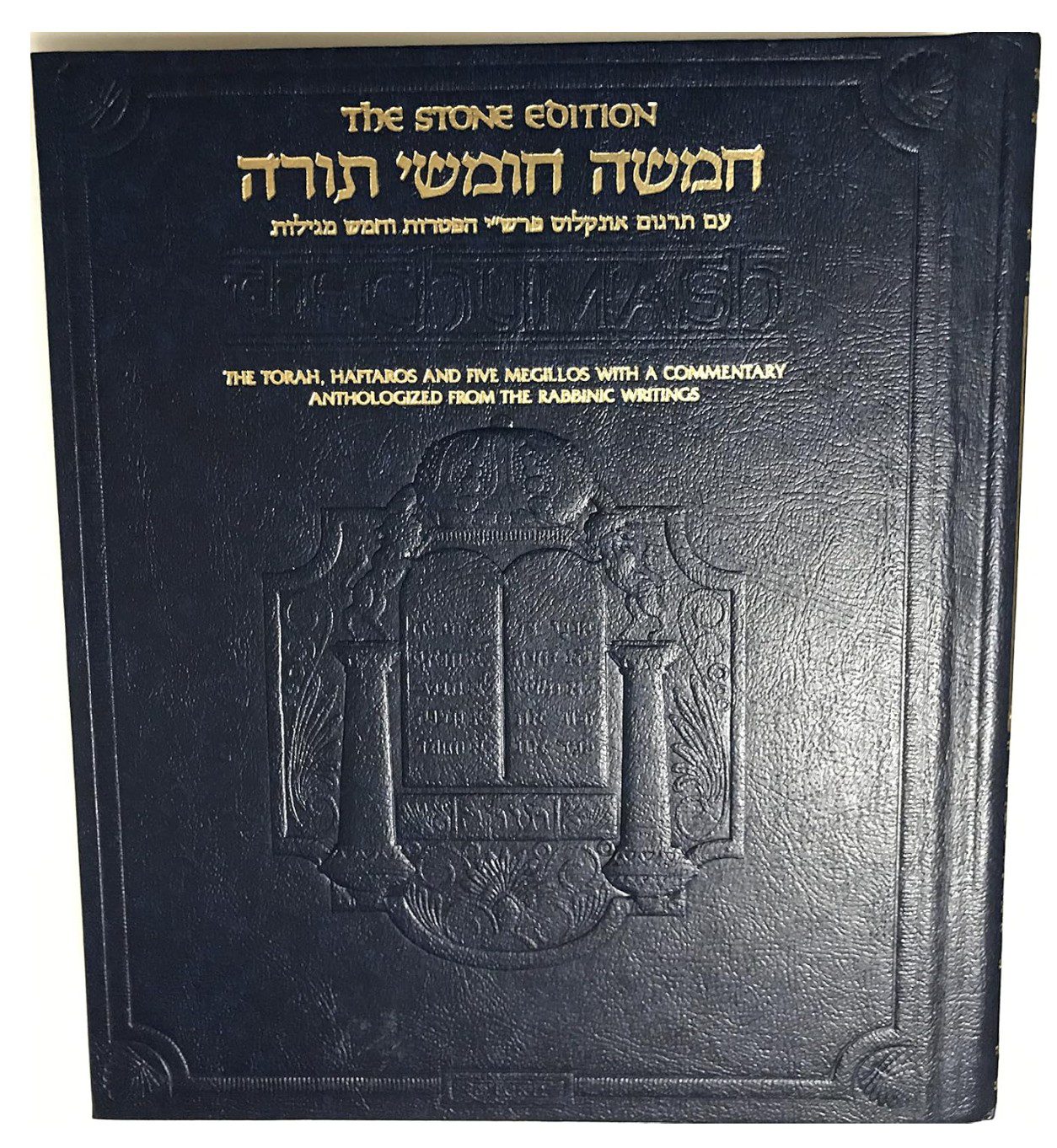
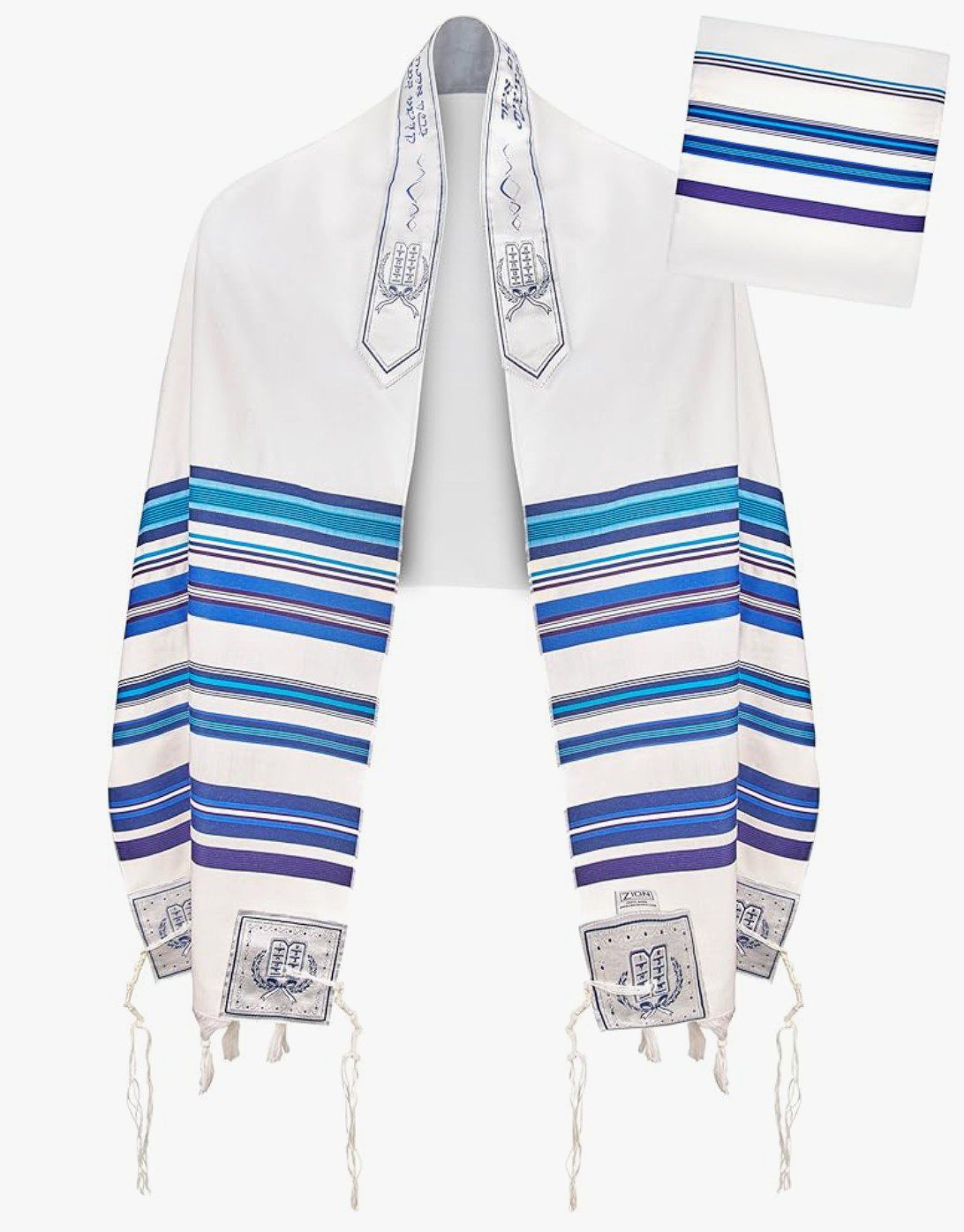
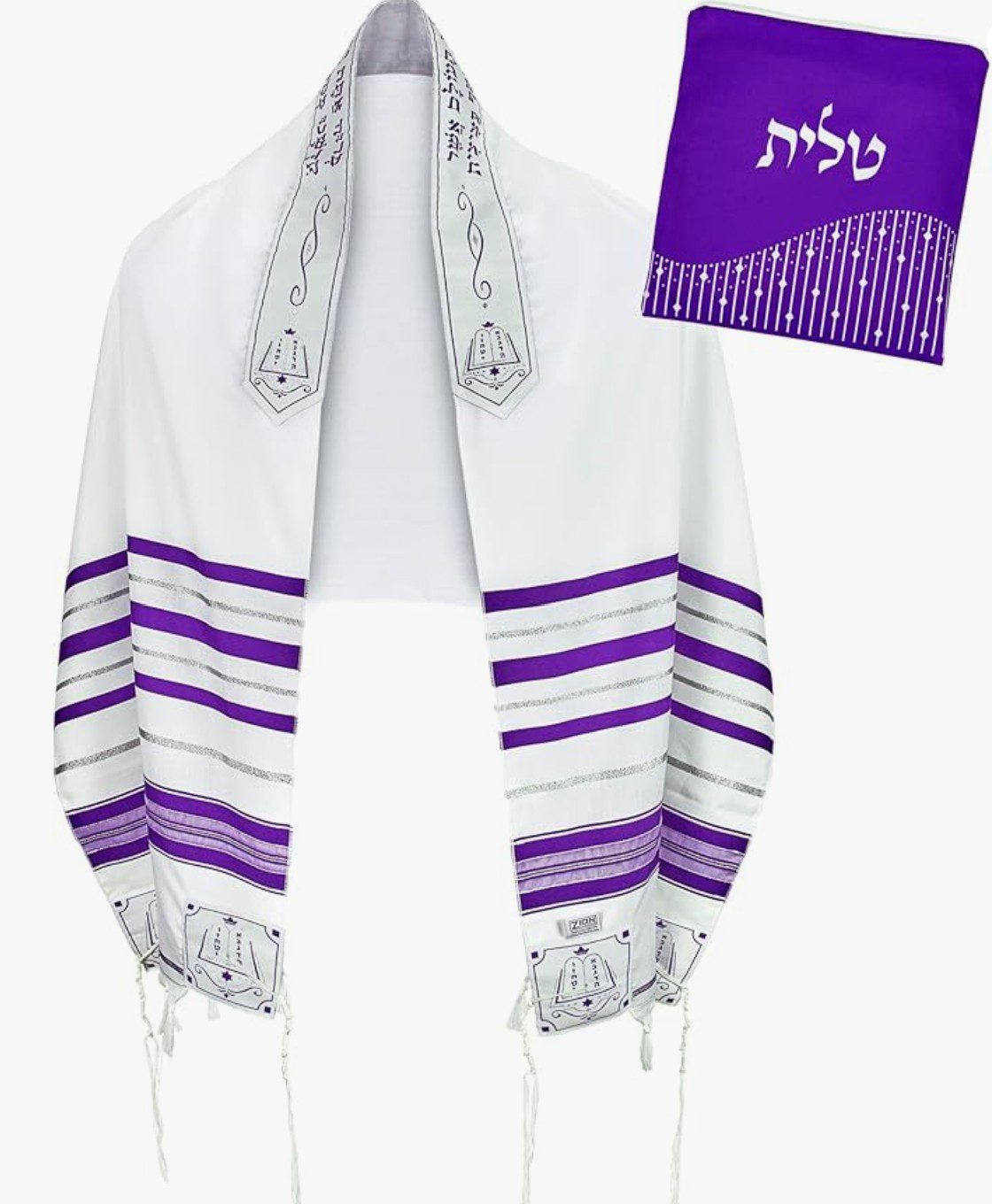
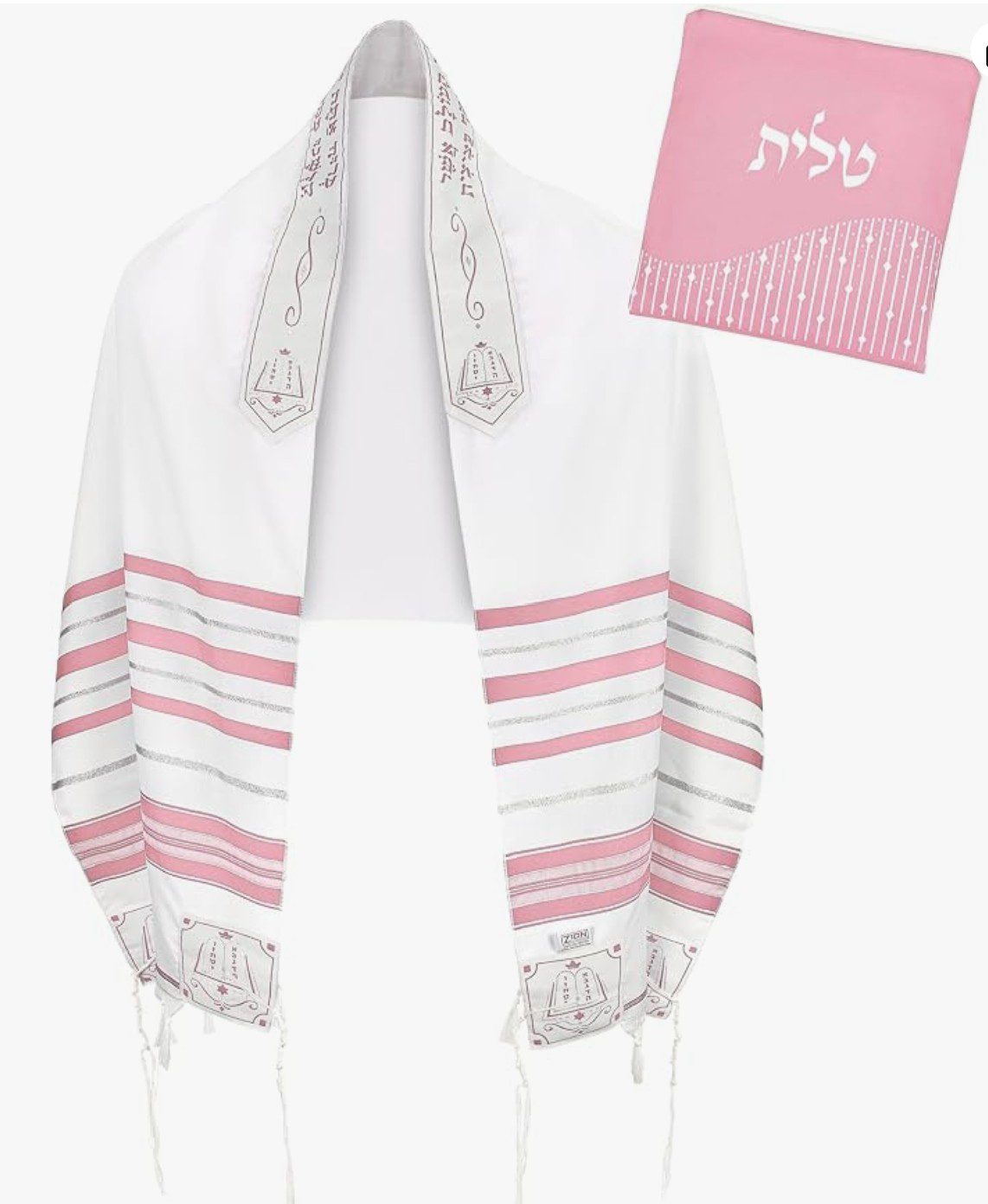
A tallit is worn during Shacharit — and by many congregations during the Simchat Torah evening service too, since the Torah is being carried and it's treated as an especially elevated occasion. These three from Zion Judaica range from a traditional cream weave to bold purple and pink.

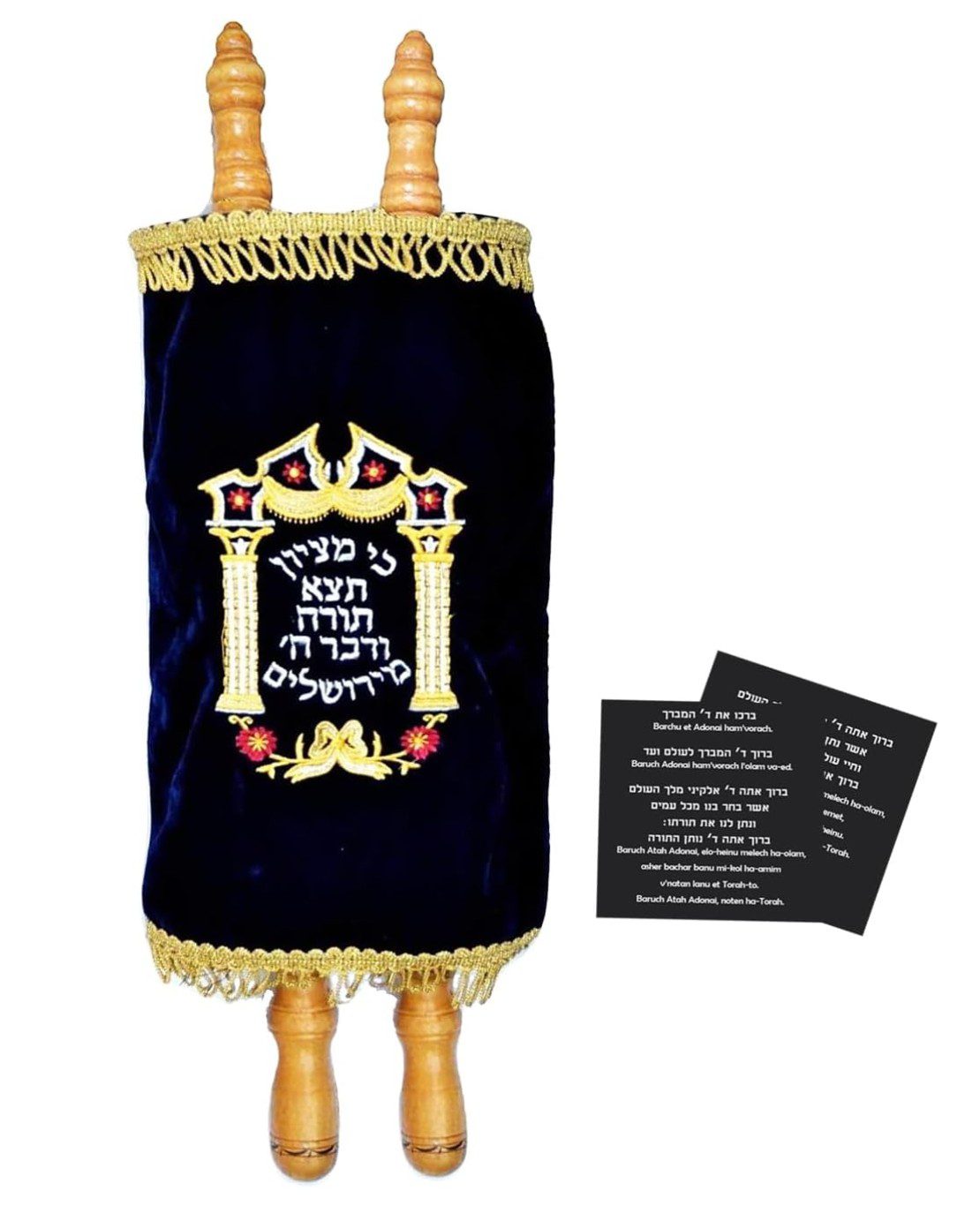
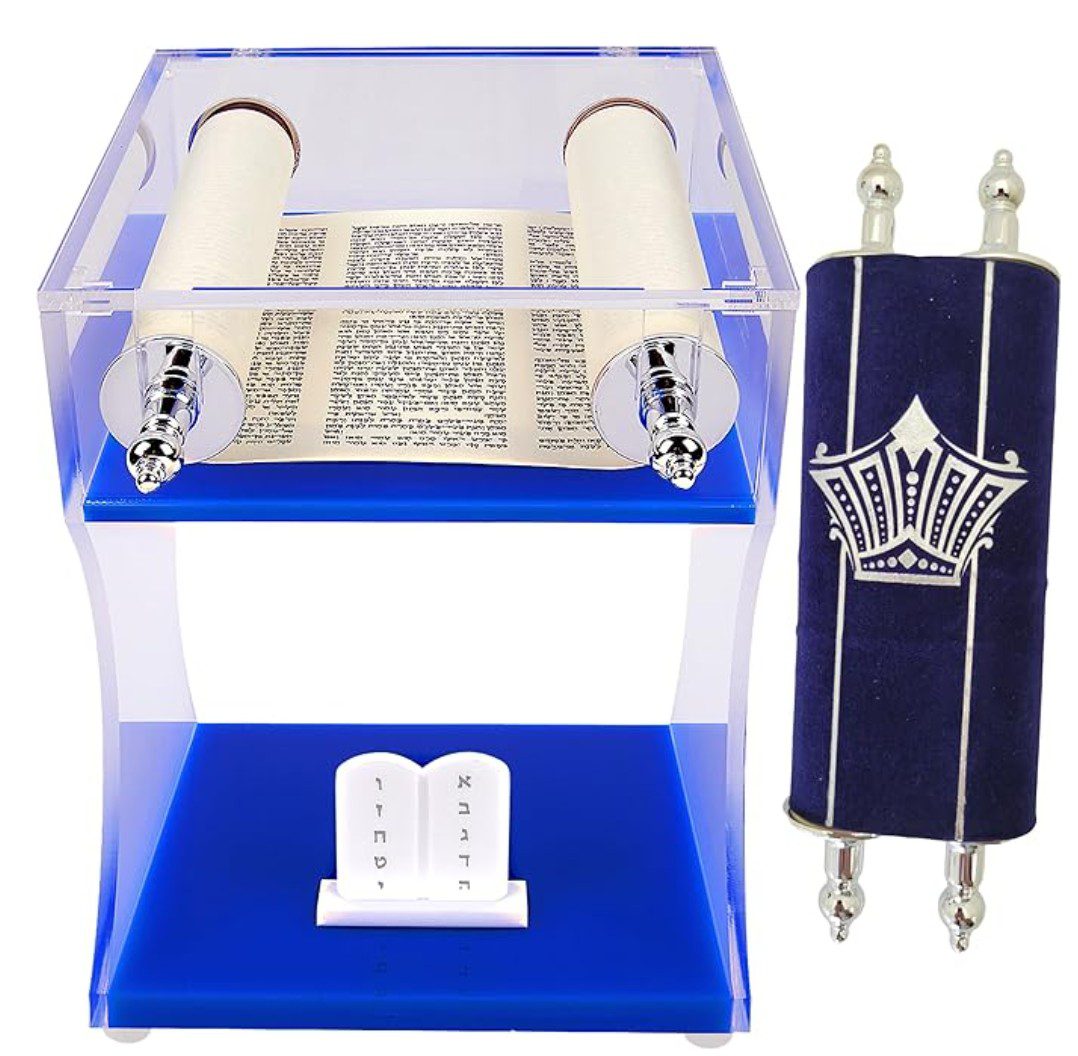
📜 Torah Scrolls & Keepsakes
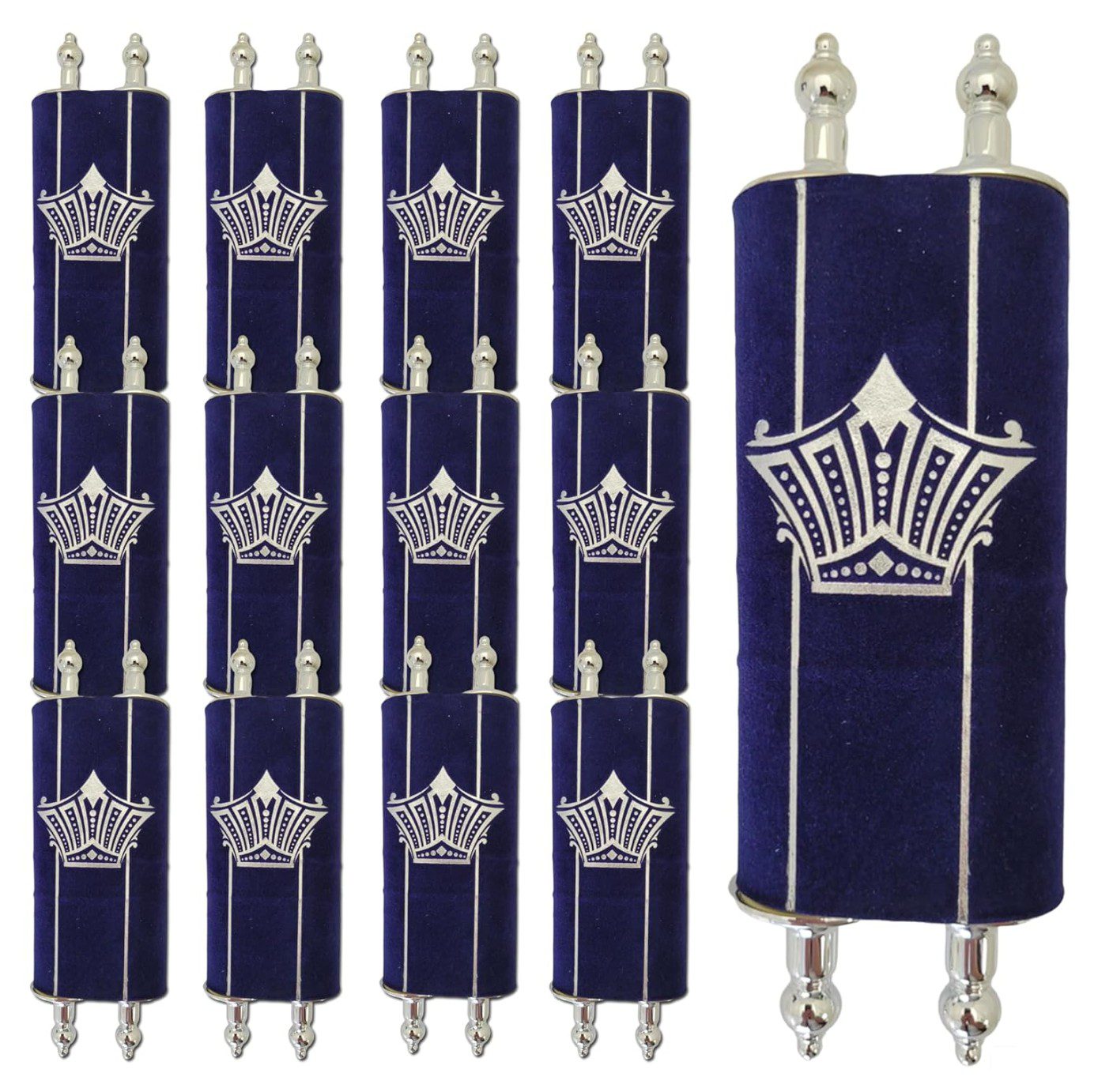
Decorative pieces that mark the day the Torah is finished and begun again.
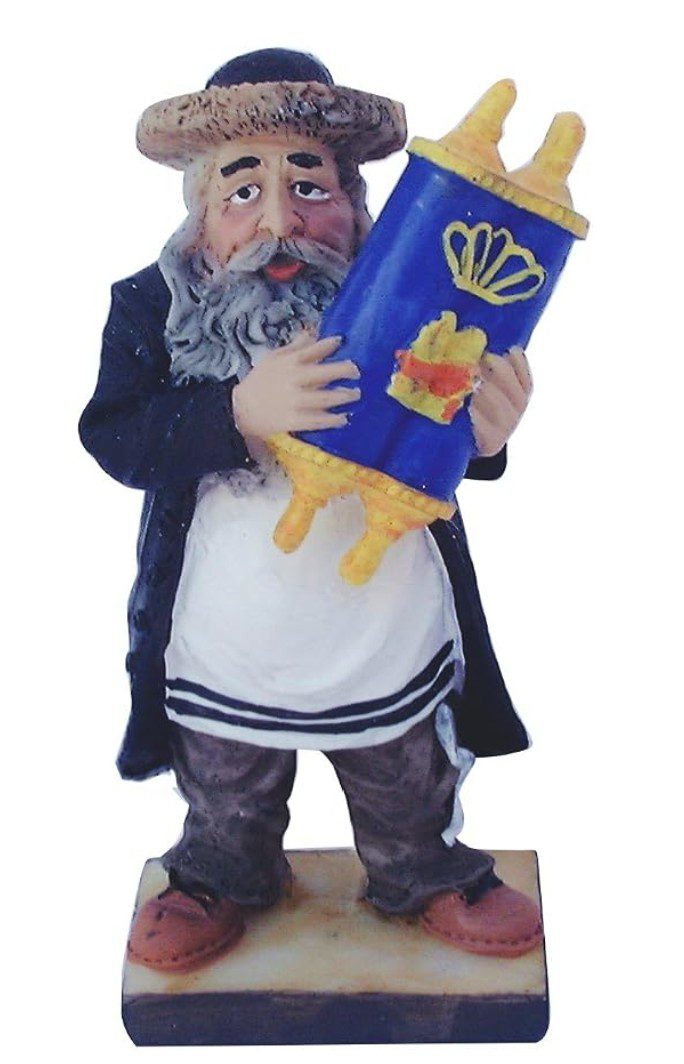
A decorative Torah scroll makes a meaningful keepsake or gift for the holiday — a physical reminder of the moment the reading cycle restarts.
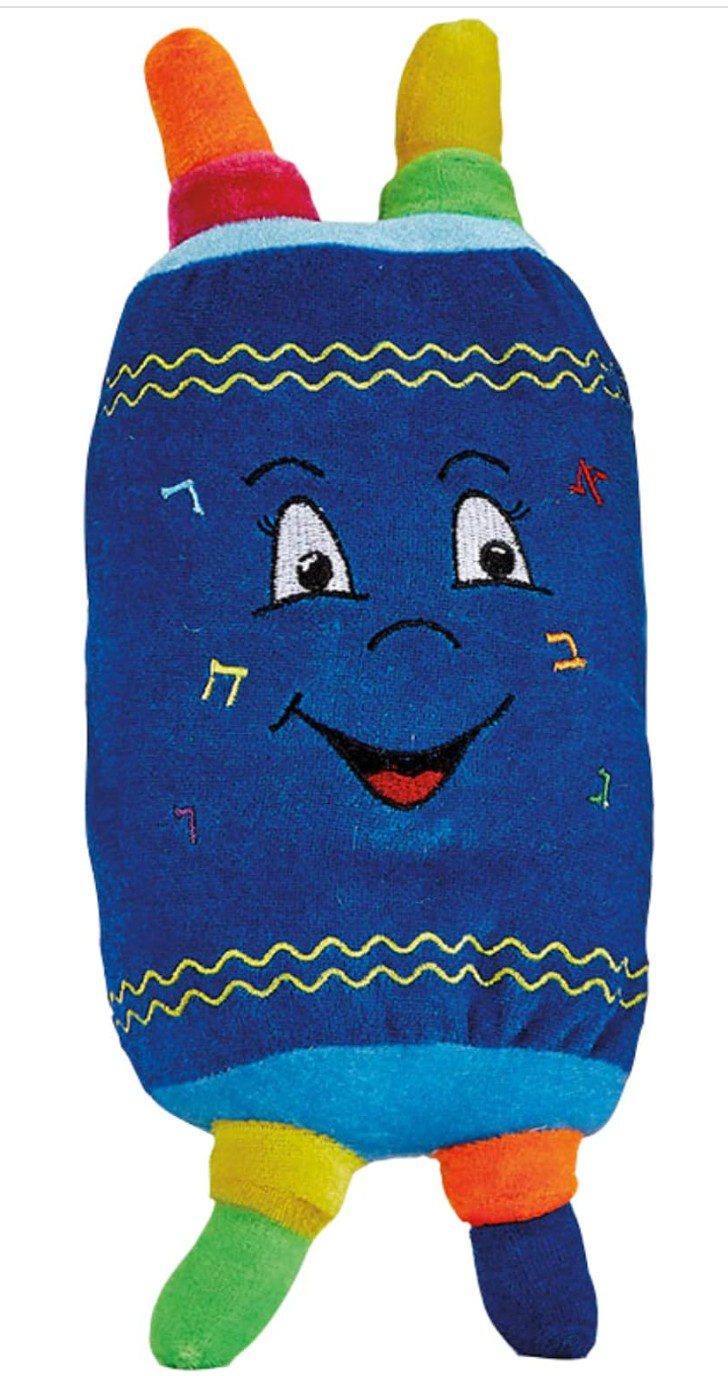
🧸 Torah Plush Toys for Kids
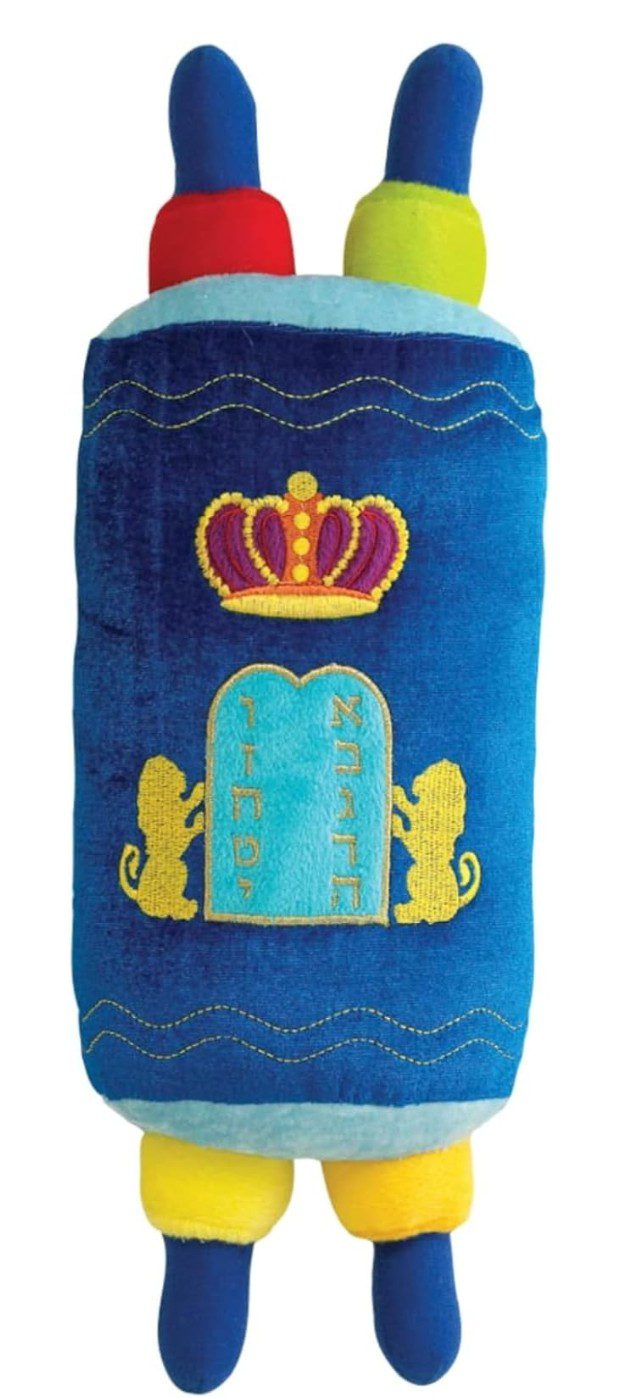
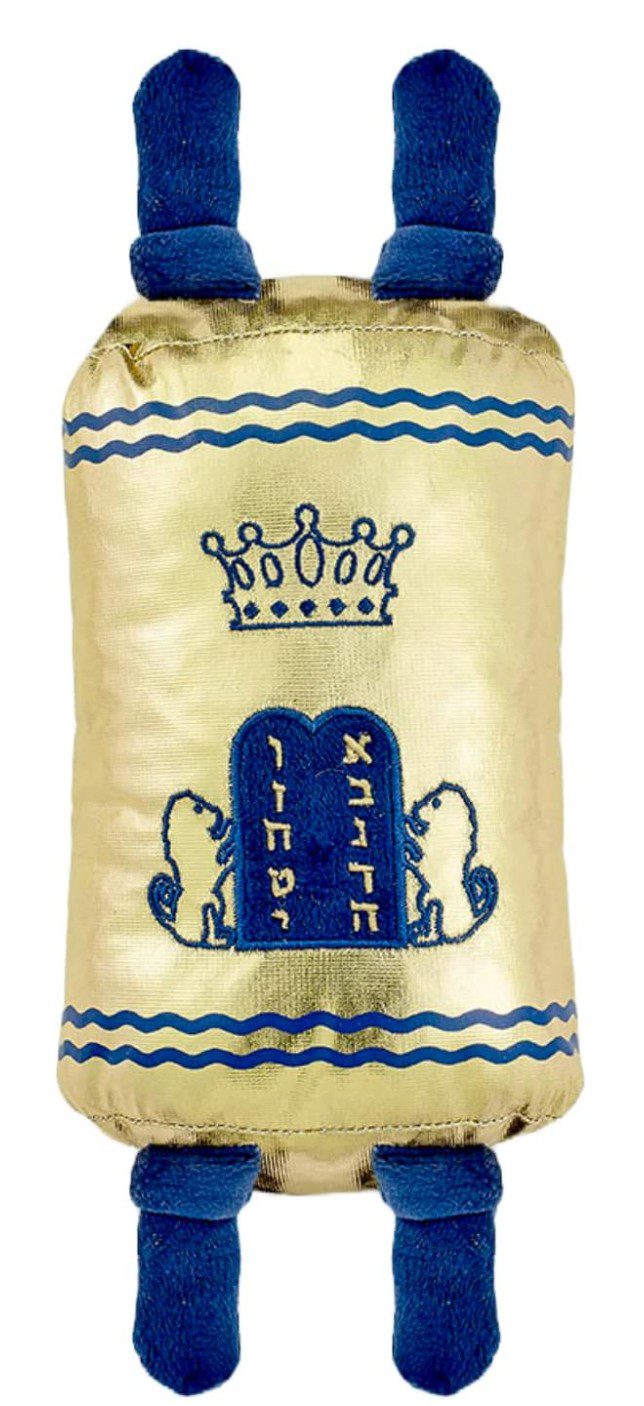
Something soft to hold during the dancing.
Kids love having their own Torah to carry alongside the grown-ups during Hakafot. These three plush options give you a soft toy, a smiling design, and a classic style to choose from.
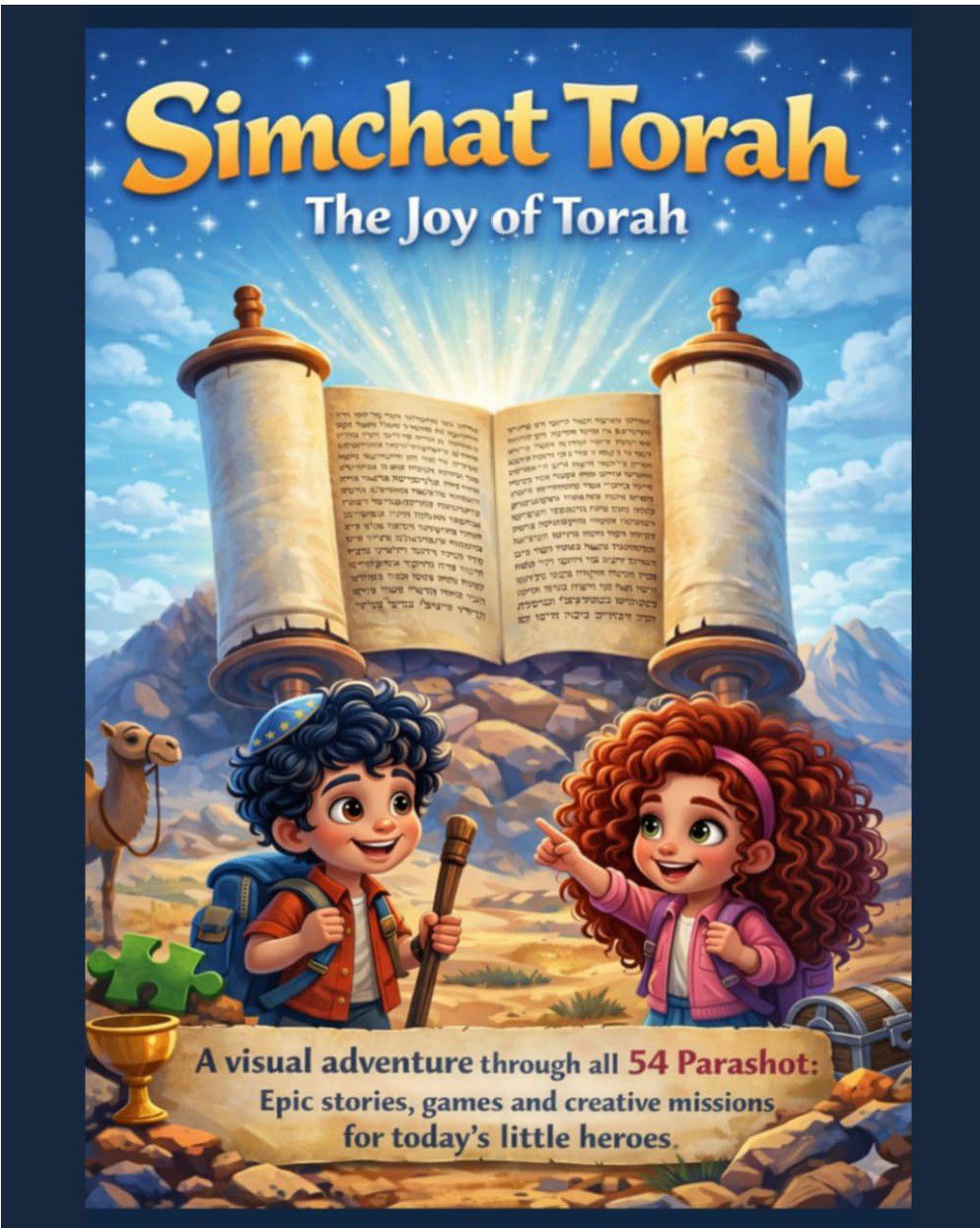
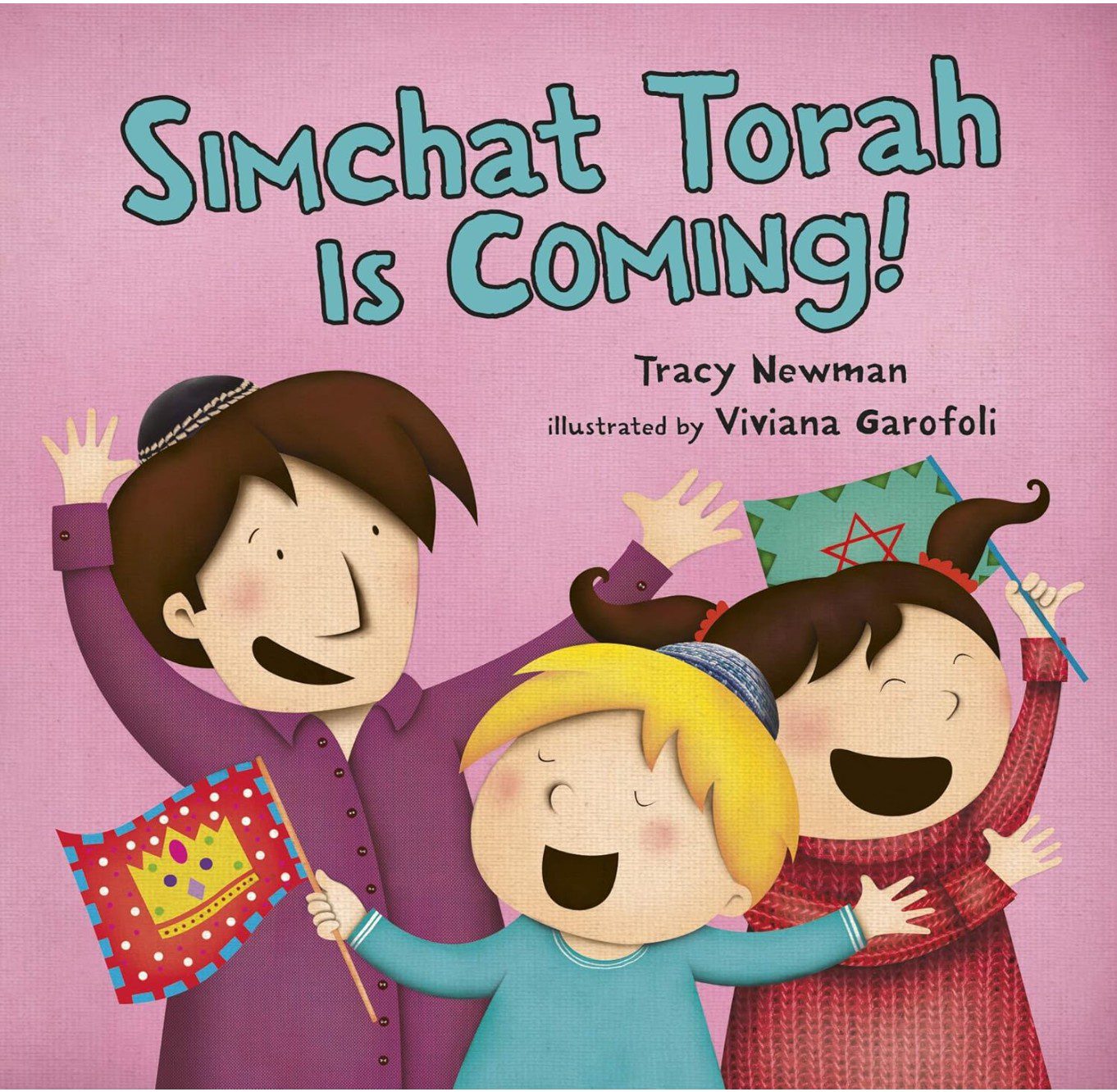
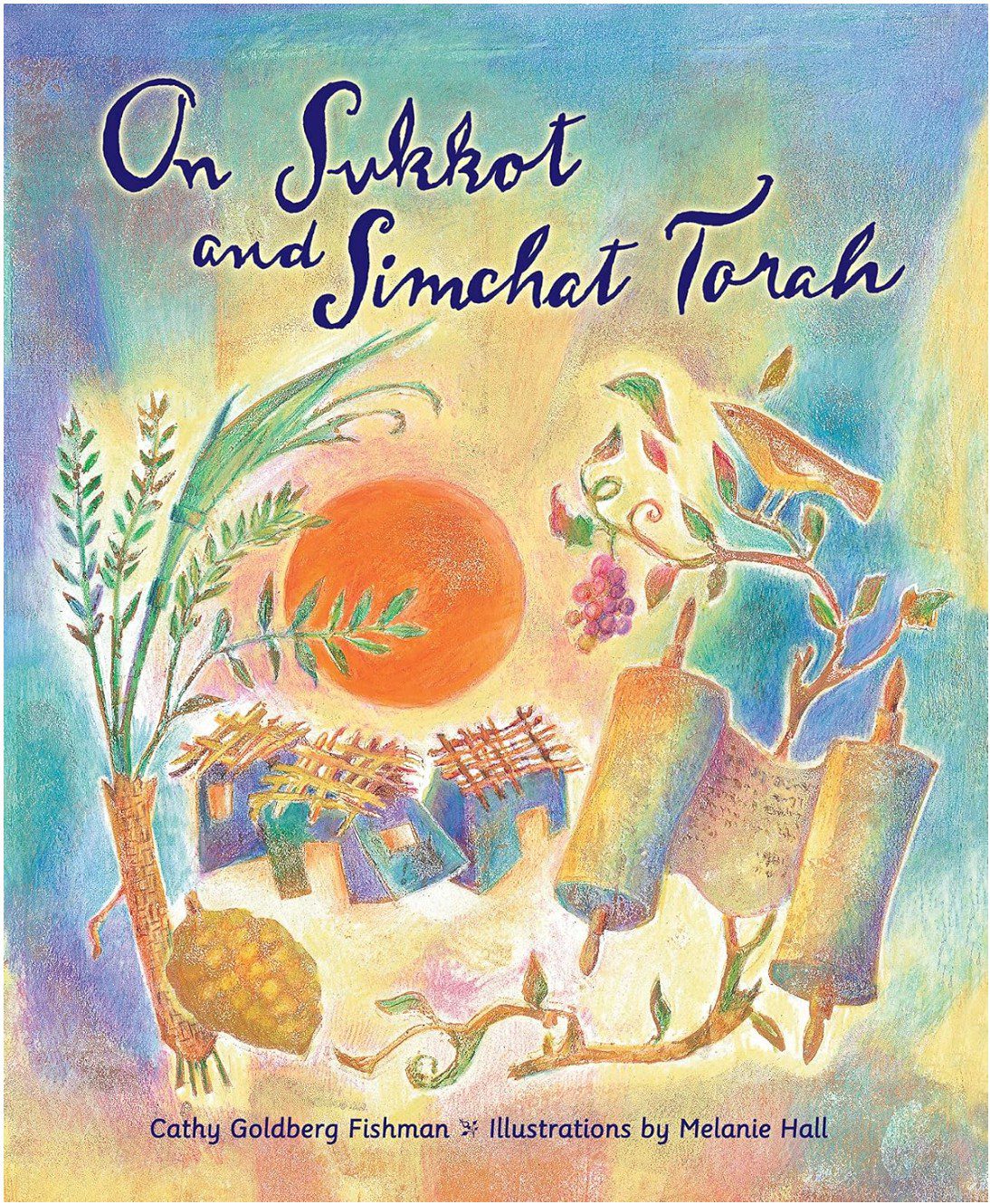
📚 Kids' Books for Simchat Torah
Helping little ones understand why we're dancing.
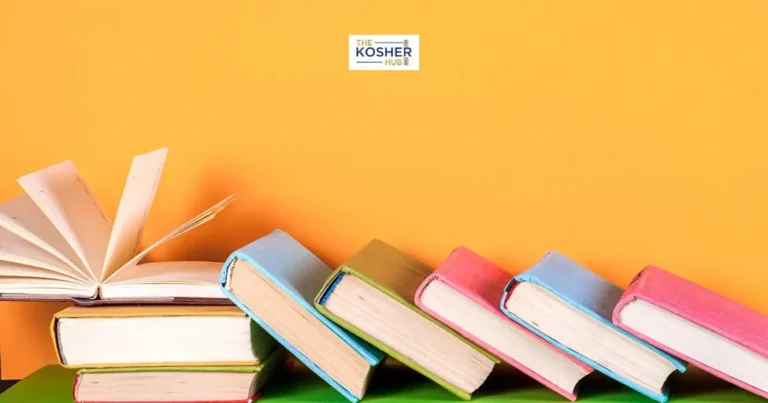
A picture book is an easy way to explain the holiday before you even leave for shul. These three cover Simchat Torah on its own and alongside Sukkot for younger readers still tying the two holidays together.
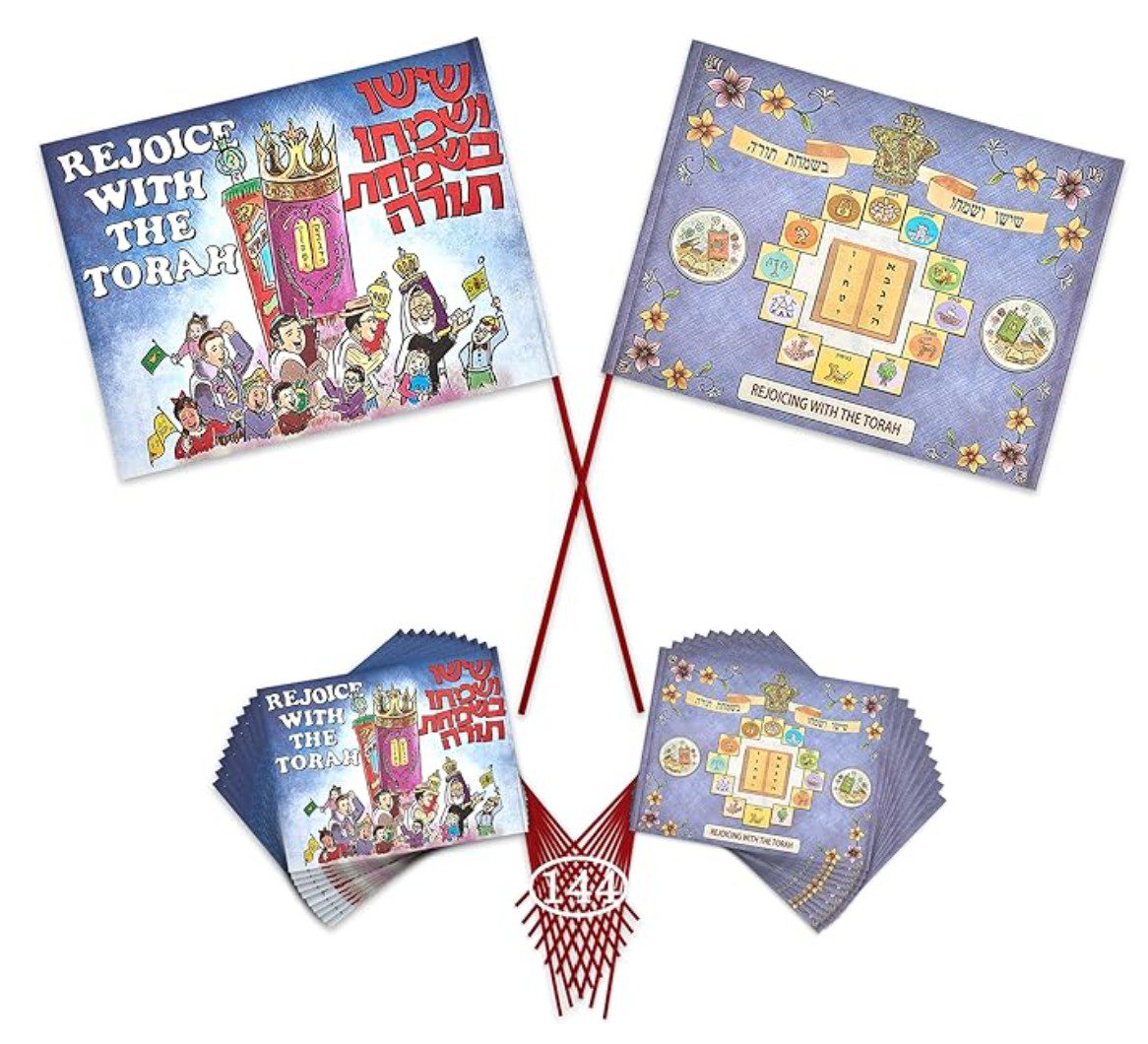
🚩 Flags for Hakafot
Keeping kids part of all fourteen circuits.
Flags give kids their own way to join the dancing during Hakafot — both the evening circuits and the second round the next morning during Shacharit.
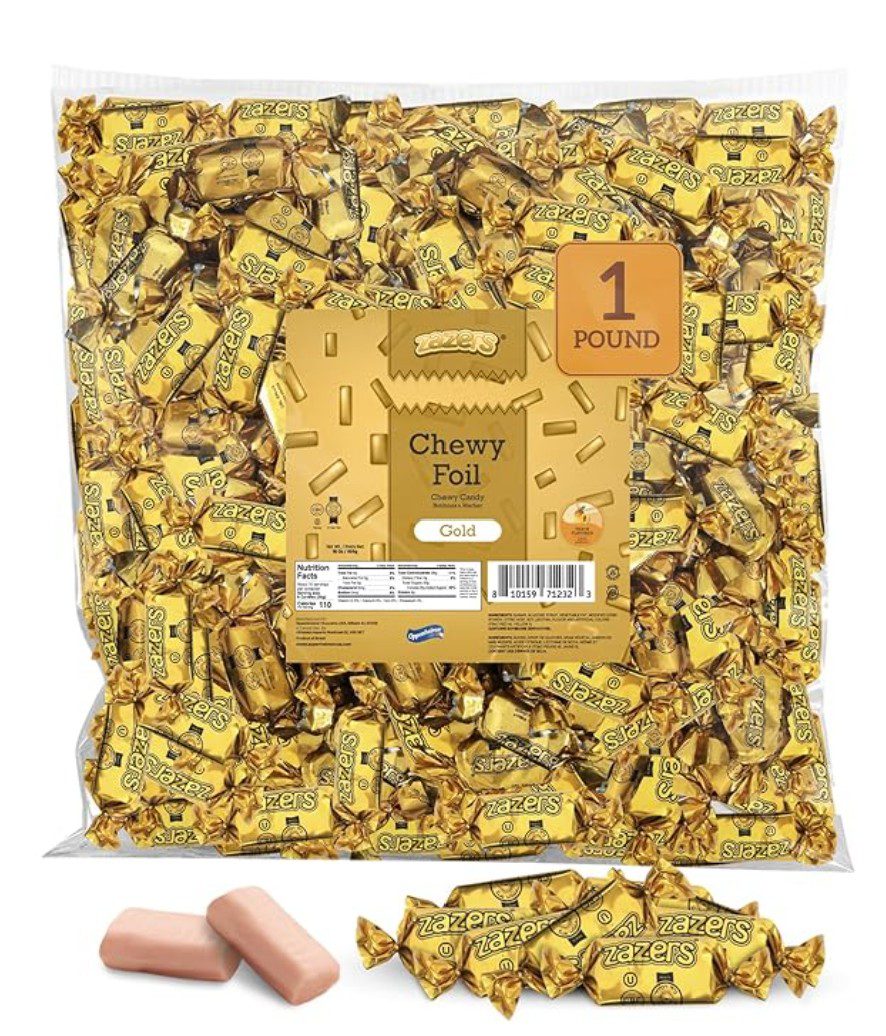
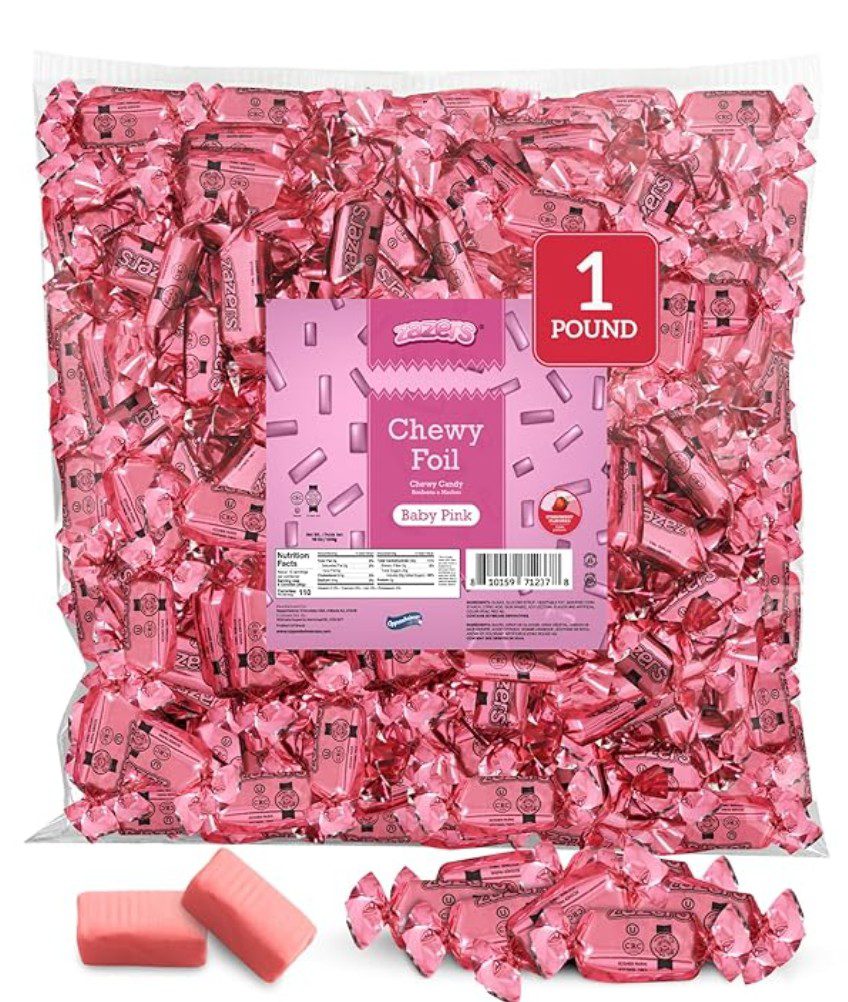
🍬 Candy for the Kids
The custom every child looks forward to all year.
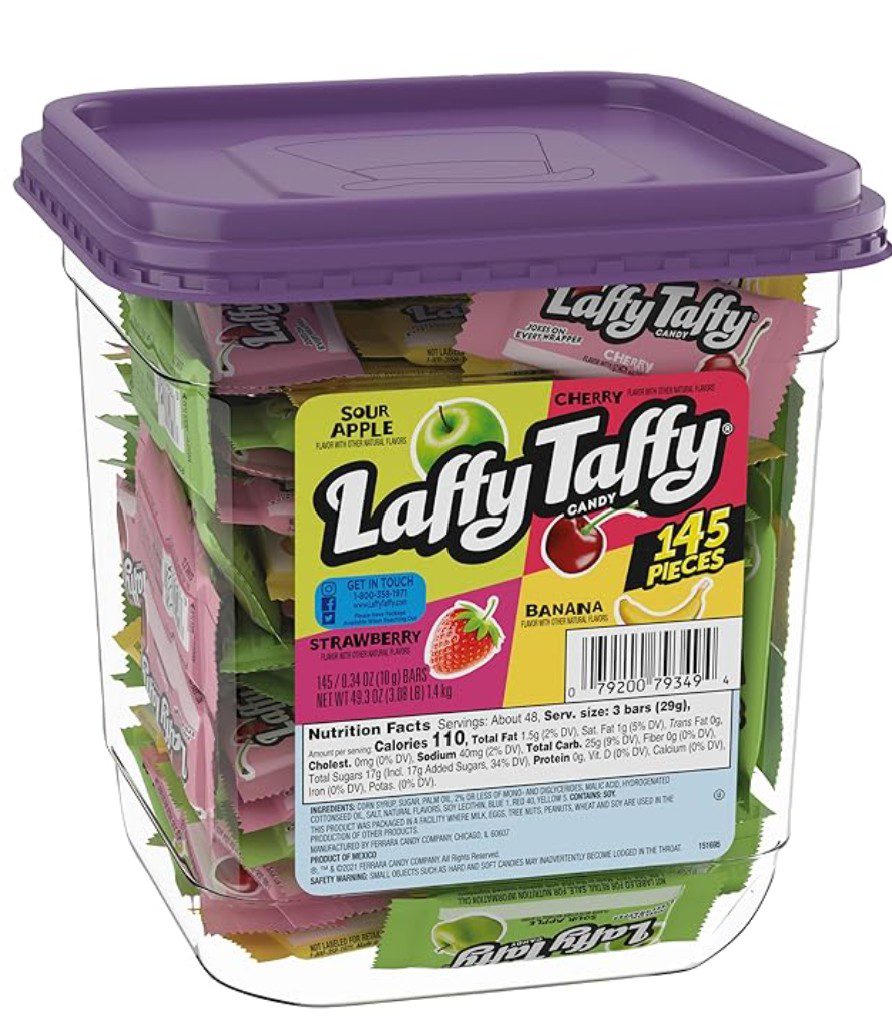
Throwing candy around alongside handing out flags during Hakafot is one of the most beloved Simchat Torah customs. Stocking up in bulk ahead of the holiday means you're never caught short mid-circuit — Zazers' three bulk flavors line up perfectly for filling little bags.





🍰 Cake for the Chag
A sweet finish to a joyful day.
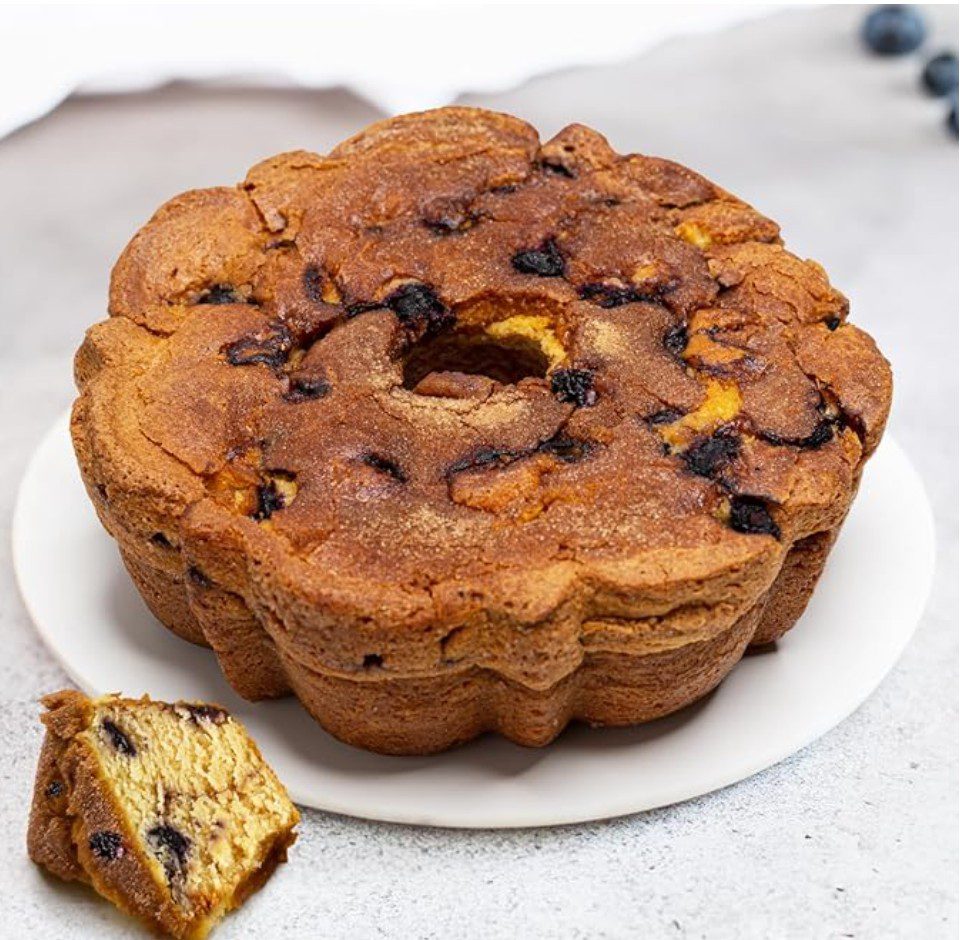
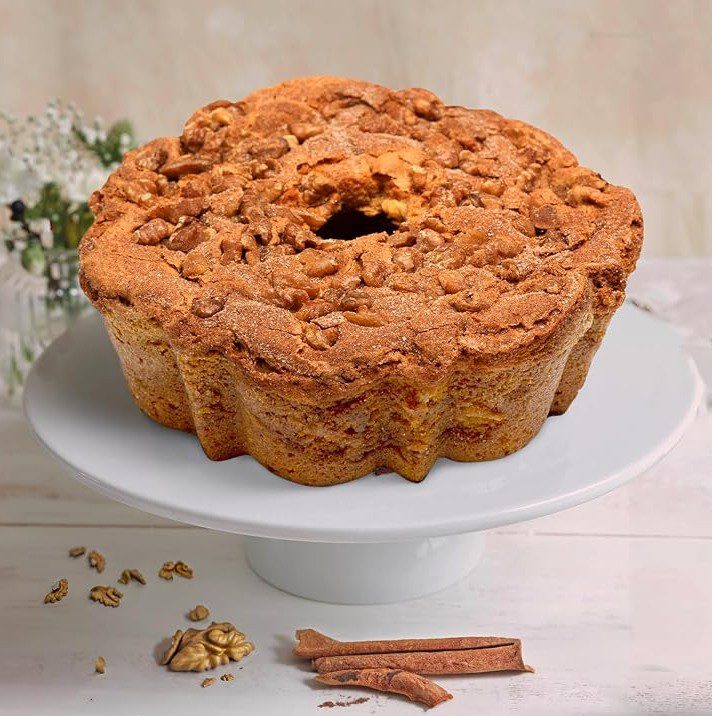
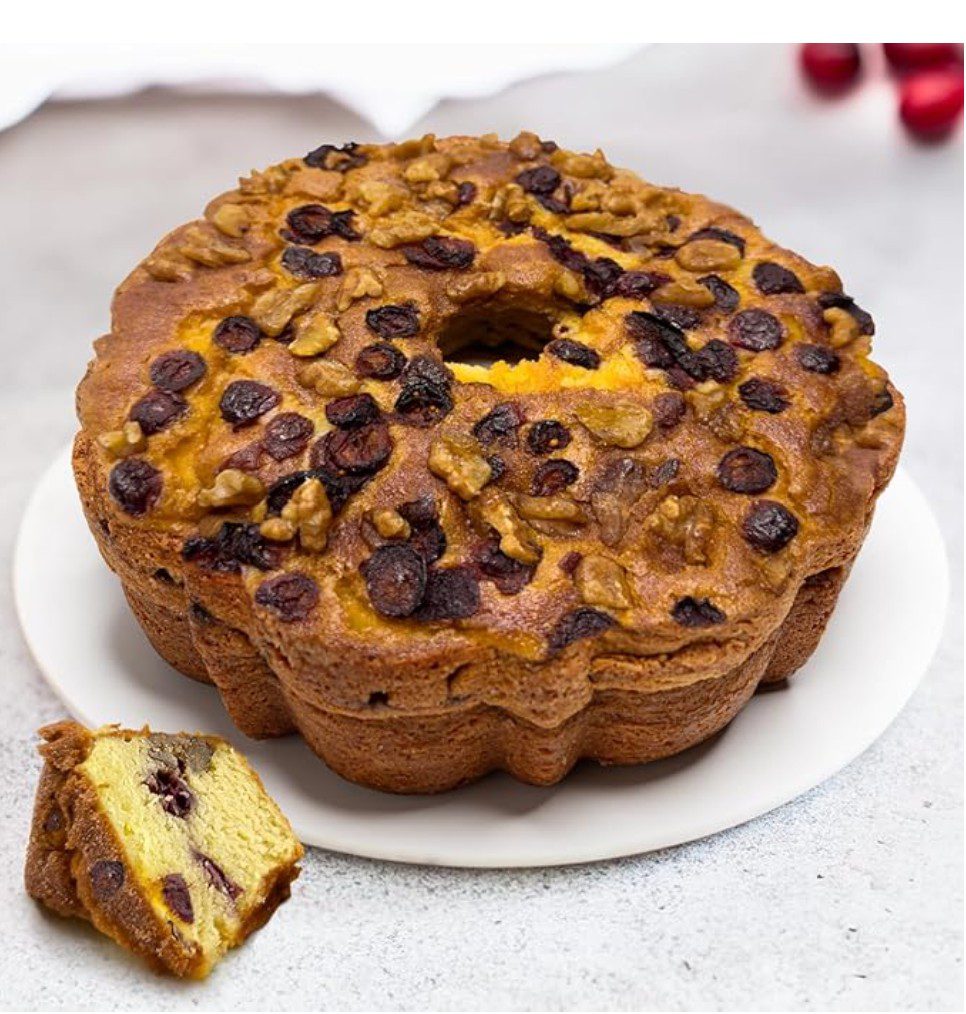
Kiddush after the morning service traditionally includes cake, and Simchat Torah calls for something a little more festive than a plain cookie tray. These three coffee cakes cover fruity, nutty, and tart, so there's a slice for every table.

A glass of wine alongside cake is also part of the Kiddush tradition on Simchat Torah, marking the sanctification of the day before the meal.
❓ Simchat Torah FAQ
When is Simchat Torah in 2026?
Simchat Torah 2026 runs 3–4 October, immediately following Sukkot.
What are Hakafot?
Hakafot are the seven joyful circuits made around the bimah while carrying the Torah scrolls, performed on the evening the holiday begins and again the next morning during Shacharit.
Who are the Chatan Torah and Chatan Bereishit?
The Chatan Torah receives the final aliyah of Deuteronomy, and the congregation responds with "Chazak, Chazak, V'Nitchazek." The Chatan Bereishit then receives the very next aliyah, opening the Book of Genesis without any pause in the yearly reading cycle.
Where does the Haftarah come from on Simchat Torah?
The Haftarah is read from the Book of Joshua 1:1–18, opening with "After the death of Moses..." — connecting the end of the Torah to the next chapter of Jewish history.
Why do children get flags and candy on Simchat Torah?
Handing out flags and candy during Hakafot keeps children engaged in the dancing and gives them their own way to participate alongside the adults.
Is a tallit worn on Simchat Torah?
Yes — a tallit is worn during Shacharit, and in many congregations during the evening Hakafot as well, since the Torah scrolls are being carried and it's treated as an elevated moment.
Why does everyone get an aliyah on Simchat Torah?
It's customary for every congregant present to be called up for an aliyah, so the Deuteronomy reading is repeated as many times as needed. Many people also pledge funds to the synagogue in honor of being called up.
The Kosher Hub is not a Kosher Authority. For any advice please refer to your local Kashrut Authority.
As an Amazon Affiliate we earn from qualifying purchases.




Understanding Our Kosher Certifications
The Kosher Hub references products certified by recognized kosher authorities, including OU, OK, Star-K, Kof-K, and CRC. Certification symbols and status can change, so always confirm the current kosher status directly on the product packaging or via the certifying agency's own listings before purchasing.