Passover is one of the most important holidays in the Jewish calendar, and 2027 falls from 21 to 29 April. Preparing for it means more than a Seder menu: it involves clearing chametz, cleaning and kashering the kitchen, and choosing foods that are certified kosher for Passover.
Sara Abraham here. I built this Passover guide so you can find every food group in one click, then work through the history, preparation, symbols, kitchen and shopping in a logical order. Every food product we feature is checked for kosher for Passover certification first, so you don’t have to hunt through labels yourself.
Start with the category tiles below, or jump straight to the section you need.
🛒 Shop Passover by Category
Every Passover food group, reviewed — pick a category to start.
Kosher for
Passover
Baby Food
Passover-friendly purees and toddler foods.
Flour, frosting and baking essentials for Pesach.
Cereal, almond milk and morning staples.
Brownies, birthday cakes, cookies and sweets.
Chocolate bars, fruit slices and sweet treats.
Cleaning products and our 20-step checklist.
Coffee, K-Cups, tea, water, grape juice and more.
Canned and certified fish for the Seder table.
Passover gift baskets to send in the USA.
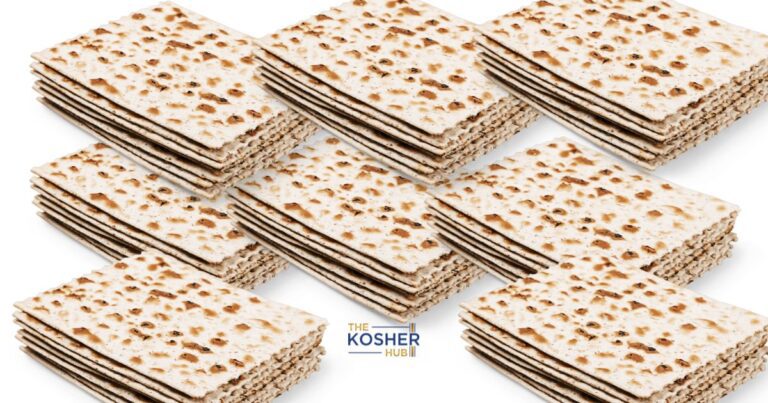
Matzo, shmurah and gluten-free matzah options.
Olive oil, spices and seasonings.
Kosher for Passover dog food, grain-free options.
Is It Kosher
for Passover?
Answers on oats, quinoa, beans, nuts and more.
Ketchup, mayo, balsamic vinegar and sauces.
Certified snacks and chips for Pesach.
Soup mixes and egg noodles.
The most trusted Passover brands on Amazon.
Passover-friendly vitamins and supplements.
📜 History of Passover
The festival of freedom.
Passover (Pesach) commemorates the Exodus of the Israelites from slavery in Egypt. It begins on the 15th of the Hebrew month of Nisan and lasts eight days outside Israel (seven in Israel).
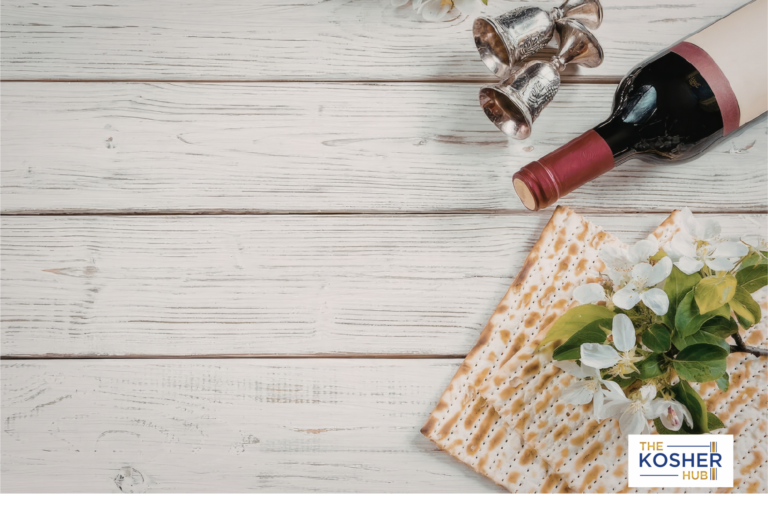
The holiday is marked by the Seder, a ritual meal where the story is retold through readings, songs and symbolic foods including matzah, maror (bitter herbs) and four cups of wine. Matzah recalls the haste of the departure, when there was no time for bread to rise.
This is also why Passover has its food laws: for the whole holiday, chametz (leavened grain products) is not eaten or kept in the home.
📝 Preparation
Getting your home and family ready.
Preparation starts weeks before the holiday. Families clear out chametz, clean every room and pantry, plan Seder menus and stock up on kosher for Passover foods. On the night before the Seder, many families perform a ceremonial search for chametz (bedikat chametz), and remaining chametz is burned or sold through a rabbi.
A good plan spreads the work across several weeks: rooms and bags first, then the kitchen, then the shopping. Our 20-step Passover cleaning checklist covers it room by room.
🔍 Kosher Symbols & the P
Why a kosher symbol alone is not enough.
A standard kosher symbol tells you a product is kosher for year-round use. For Passover, the product needs additional supervision, shown by the letter P next to the kosher symbol, for example OU-P.
If a product carries the OU symbol without the P, do not assume it is kosher for Passover. Other reliable kosher agencies mark their Passover products in their own way, so check the packaging or the agency’s website.
For the OU’s own guidance and lists, visit the OU Kosher Passover page. The Kosher Hub is not a Kosher Authority, so always check with your local Kashrut Authority if unsure.
🍽️ Kitchen: Cleaning & Kashering
Turning your kitchen over for Passover.
The kitchen is the heart of Passover preparation. Cabinets, drawers, counters, appliances and utensils used for chametz all need to be thoroughly cleaned. Anything you will use on Passover must be either kashered, replaced with Passover-only items, or set aside.
Cleaning comes first: remove all food, grease and residue, especially in hinges, seams, crevices and around burners. Kashering only works on a clean surface.
♨️ Kashering
Making kitchen items ready for Passover.
Kashering is the process of removing absorbed chametz from utensils and appliances. In general, an item is kashered the same way it was used: with liquid, by heat, or by direct flame. Before kashering, clean the item thoroughly and wait 24 hours from its last use.
Not every material can be kashered. Earthenware and china, for example, generally cannot, and some items are usually replaced. The rules below are an overview, and your rabbi has the final word.
The Four Methods
Hagalah (immersion in boiling water): for utensils used with hot liquid, such as pots, cutlery and serving utensils. The item is fully immersed in a pot of water at a rolling boil, then rinsed in cold water.
Boiling water: the large pot used for hagalah must itself be clean and, if previously used for chametz, kashered first. Keep the water boiling between items.
Libun (heating with fire): for items used directly over fire or with dry heat, such as grill grates and broiler racks. The item is heated until it glows, or (for lighter use) to the highest oven heat.
Irui (pouring boiling water): for items that took in chametz from hot liquid poured on them, such as sinks and some surfaces. Boiling water is poured from a pot that has just been removed from the heat, in a continuous stream over the whole surface.
Gas Stoves
Clean grates and burners thoroughly, then turn each burner to its highest setting for about 15 minutes. Cover the surrounding surfaces and control knobs, or clean them well.
Electric Stoves
Clean the coils or cooktop and turn each element on high until it glows red (typically several minutes). Smooth glass or ceramic tops are usually cleaned and covered, so ask your rabbi about yours.
Ovens & Broilers
Clean the oven thoroughly, then run it at its highest setting for about an hour. A self-clean cycle is widely accepted, but check with your rabbi. Broilers require libun, often heating until the racks glow; broiler pans are commonly replaced.
Dishwashers
Practice varies. Some rabbis permit kashering a dishwasher after cleaning and a hot empty cycle, often with racks replaced, while many advise against it. Ask your rabbi before relying on it.
Small Appliances
Toasters, toaster ovens, slow cookers and mixers vary widely. Toasters are generally not kashered, and many families keep Passover-only small appliances. Some appliances with metal parts can be kashered by their use, so check with your rabbi.
Food Processors & Blenders
Metal blades and bowls used only with cold food can often be kashered by hagalah, but plastic parts and gaskets are complicated. Many families use Passover-only food processors or replacement bowls and blades.
Kitchen Surfaces
Clean countertops and tables thoroughly, wait 24 hours, then pour boiling water over them (irui). Stainless steel and some solid surfaces are commonly kashered this way, while others, such as some stone, are treated differently. Cover the kashered surface for extra care, and ask your rabbi about your material.
🛍️ Shopping for Passover
What to buy and how to read the label.
When shopping, look for the letter P next to the kosher symbol, for example OU-P. A symbol without the P is not enough for Passover.
For the OU’s Passover product information and updates, visit the OU Kosher Passover page. Then use the category tiles at the top of this page to find matzah, sauces, drinks, desserts and more, all checked for kosher for Passover certification.
❓ Passover FAQ
Quick answers to common Passover questions.
When is Passover 2027?
Passover 2027 runs from 21 to 29 April 2027. It lasts eight days outside Israel, with the Seder held on the first two nights.
What does kosher for Passover mean?
Kosher for Passover means a product has been certified free of chametz (leavened grain) and produced under Passover supervision. Look for the letter P next to the kosher symbol, for example OU-P.
Is regular kosher food acceptable on Passover?
Not automatically. A product that is kosher all year may contain chametz or be made on equipment that also handles it. For Passover, choose products marked with a P next to the kosher symbol.
What is chametz?
Chametz is any food made from wheat, barley, rye, oats or spelt that has come into contact with water and been allowed to ferment or rise. It is avoided and removed from the home throughout Passover.
What is kashering?
Kashering is the process of making a kitchen item usable for Passover, using methods such as boiling water (hagalah), direct heat (libun) or pouring boiling water (irui). The method depends on how the item was used and what it is made of, so ask your rabbi if unsure.
What is kitniyot and can I eat it on Passover?
Kitniyot includes rice, corn, beans, lentils and similar foods. Many Ashkenazi communities avoid them, while many Sephardic communities eat them. Follow your family custom and ask your rabbi if unsure.
The Kosher Hub is not a Kosher Authority. For any advice please refer to your local Kashrut Authority.
As an Amazon Affiliate we earn from qualifying purchases.