
The Kosher Hub – Find the Best Kosher Foods Online

Keeping a Kosher Kitchen

kosher kitchen
A kosher kitchen is more than a place where kosher food happens to be cooked — it's a home run according to a set of practices, passed down for thousands of years, that shape everything from how dishes are stored to what happens when a new pot comes out of the box. At its heart, a kosher kitchen is organized around one central idea: keeping meat and dairy completely separate, using only ingredients and equipment that meet kosher standards, and following the guidance of a Rabbi or Kashrut Authority when questions arise. It can look as simple as color-coded dish towels and two sets of utensils, or as involved as a fully divided double kitchen. This guide walks through the basics — where the practice comes from, what forbidden foods and kosher slaughter mean, how meat and dairy separation actually works day to day, what tevilah is, how to recognize a reliable kosher symbol, and what changes at Passover — along with the everyday products that make running a kosher kitchen easier.
📦 Looking for more options? Browse our full Kosher Restaurant Guides or explore Kosher for Passover Foods for holiday-specific essentials.

📖 Where Kosher Kitchen Practice Comes From

The Torah basis for a kosher home.

The dietary laws that shape a kosher kitchen come from the Torah itself — Leviticus 11 and Deuteronomy 14 lay out which land animals, birds, and sea creatures may be eaten, and which may not. A separate verse, repeated three times across Exodus and Deuteronomy ("you shall not boil a kid in its mother's milk"), is the traditional source for the practice of keeping meat and dairy apart — a principle the rabbis expanded over centuries into the full system of separate dishes, utensils, and waiting periods observed today. These are ancient, foundational texts, and the details of how they apply to a modern kitchen are genuinely nuanced — for specific questions, this is exactly the kind of thing your local Rabbi or Kashrut Authority is there to answer.
the kosher store on Amazon

The Kosher Store

Browse the range of Kosher Certified food on Amazon

Visit Store →

🚫 Forbidden Foods & Kosher Slaughter

The basics, without the deep-dive.

Broadly, kosher land animals must both chew their cud and have fully split hooves — which is why cattle, sheep, and goats are kosher but pigs and rabbits are not. Fish must have both fins and scales, which rules out shellfish and most seafood entirely. Birds of prey are excluded, and pork and shellfish are the two most well-known forbidden categories. Kosher meat must also come from ritual slaughter, known as shechita — performed by a trained shochet using a specific method intended to be quick and precise. We won't go deep into the technical details of shechita here, since it's a specialized area best explained by a Rabbi or Kashrut Authority, but it's worth knowing that this step — not just the animal species — is what makes meat kosher in the first place.
For the full breakdown of which animals are kosher and which aren't, see our List of Kosher and Non-Kosher Animals, and for the bigger picture on kosher eating overall, see What Is a Kosher Diet?
Cook With Color — Shop Color-Coded Kitchen Sets on Amazon

The Kosher Cook

Browse the full color-coded kitchen range on Amazon

Visit Store →

🍽️ Meat, Dairy & Pareve — Color-Coded Utensils

The everyday system that makes separation simple.
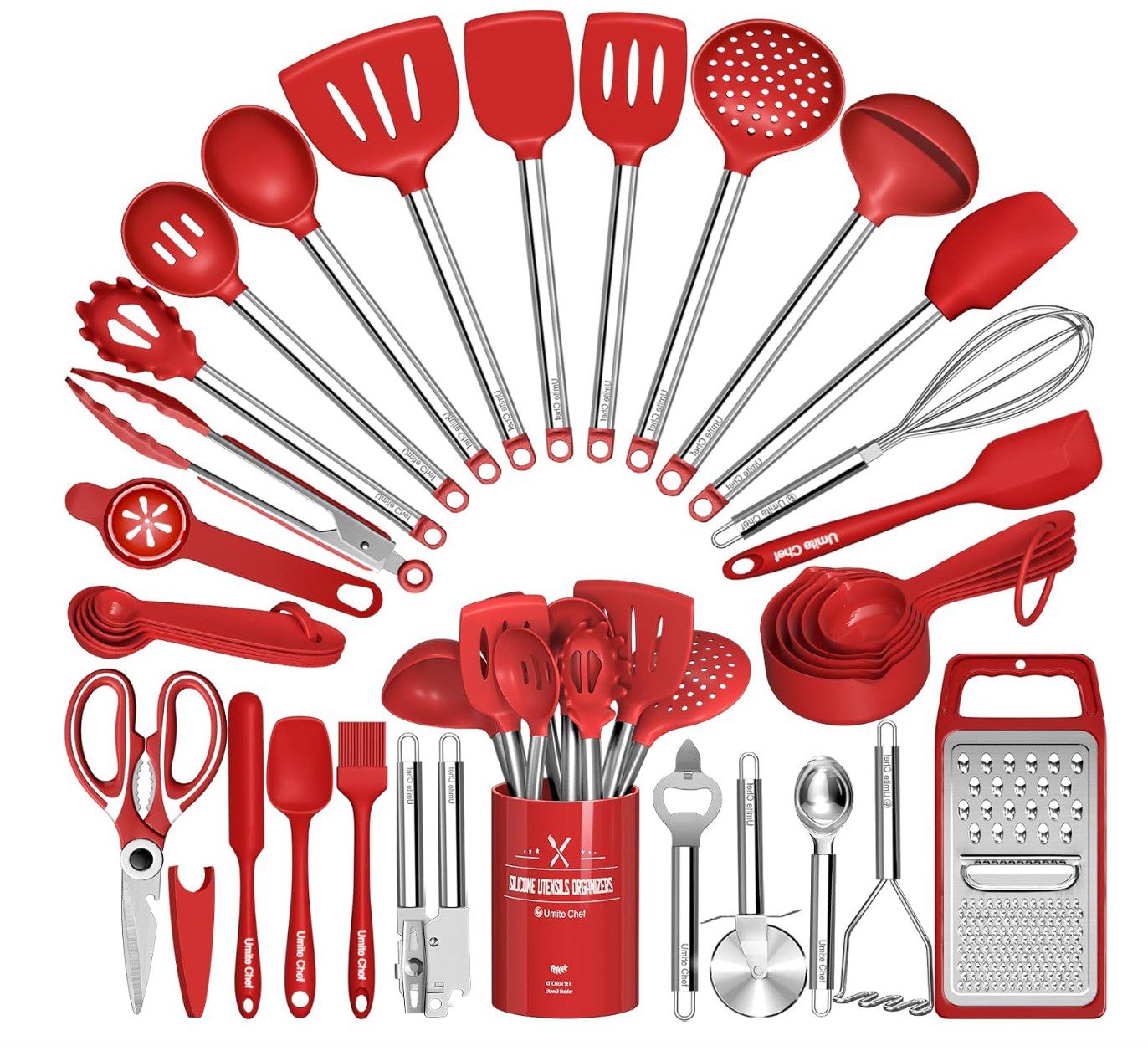
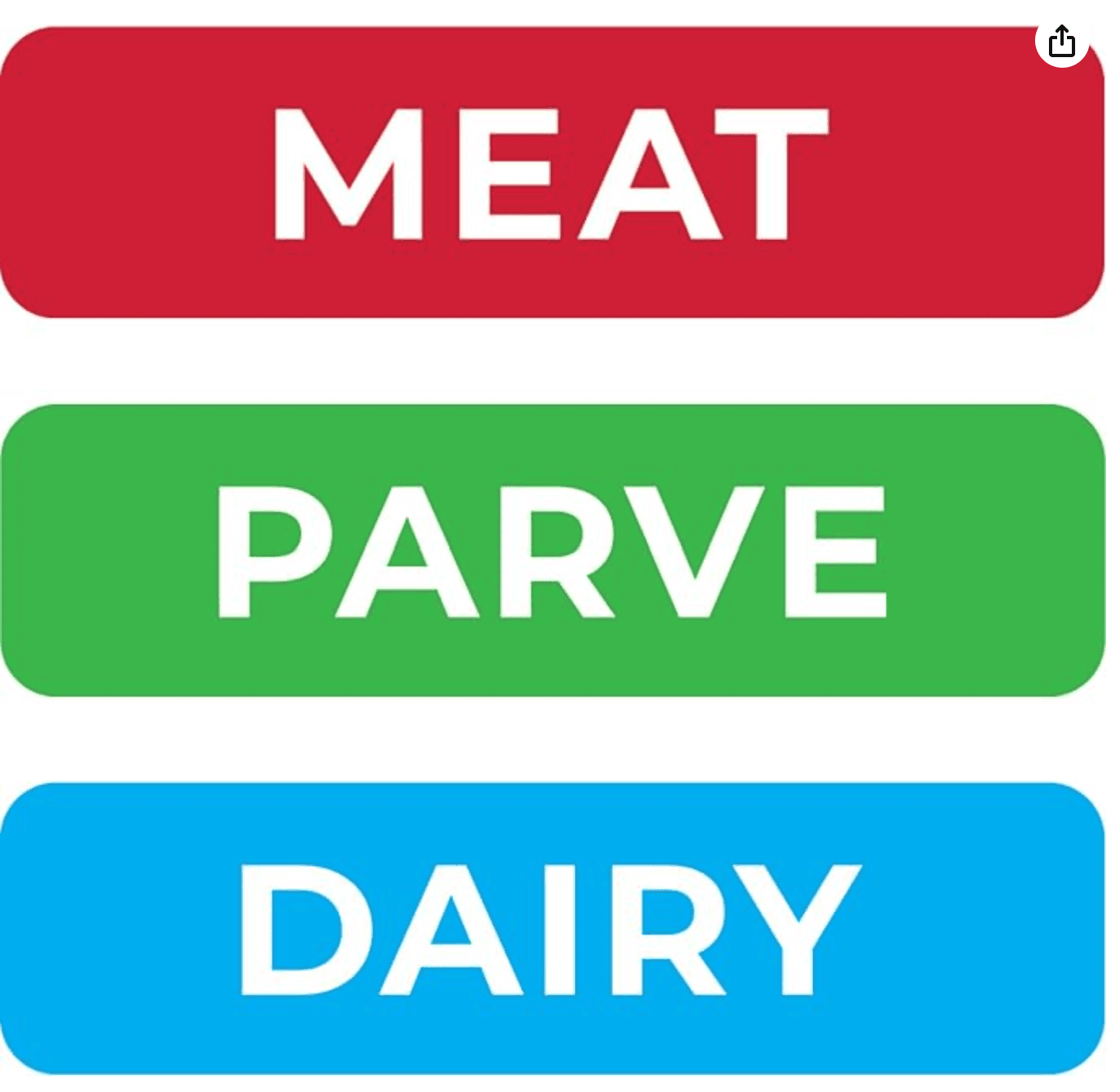
Meat and dairy must be kept completely separate in a kosher kitchen — different dishes, different utensils, different cookware, and ideally different sponges and dish towels too. A large middle category called pareve (neither meat nor dairy — fruits, vegetables, eggs, fish, grains) can be used with either side. The easiest way to manage this day to day is a color-coded system: red for meat, blue for dairy, and green for pareve. Once a household commits to the colors, there's no second-guessing which spatula goes where.
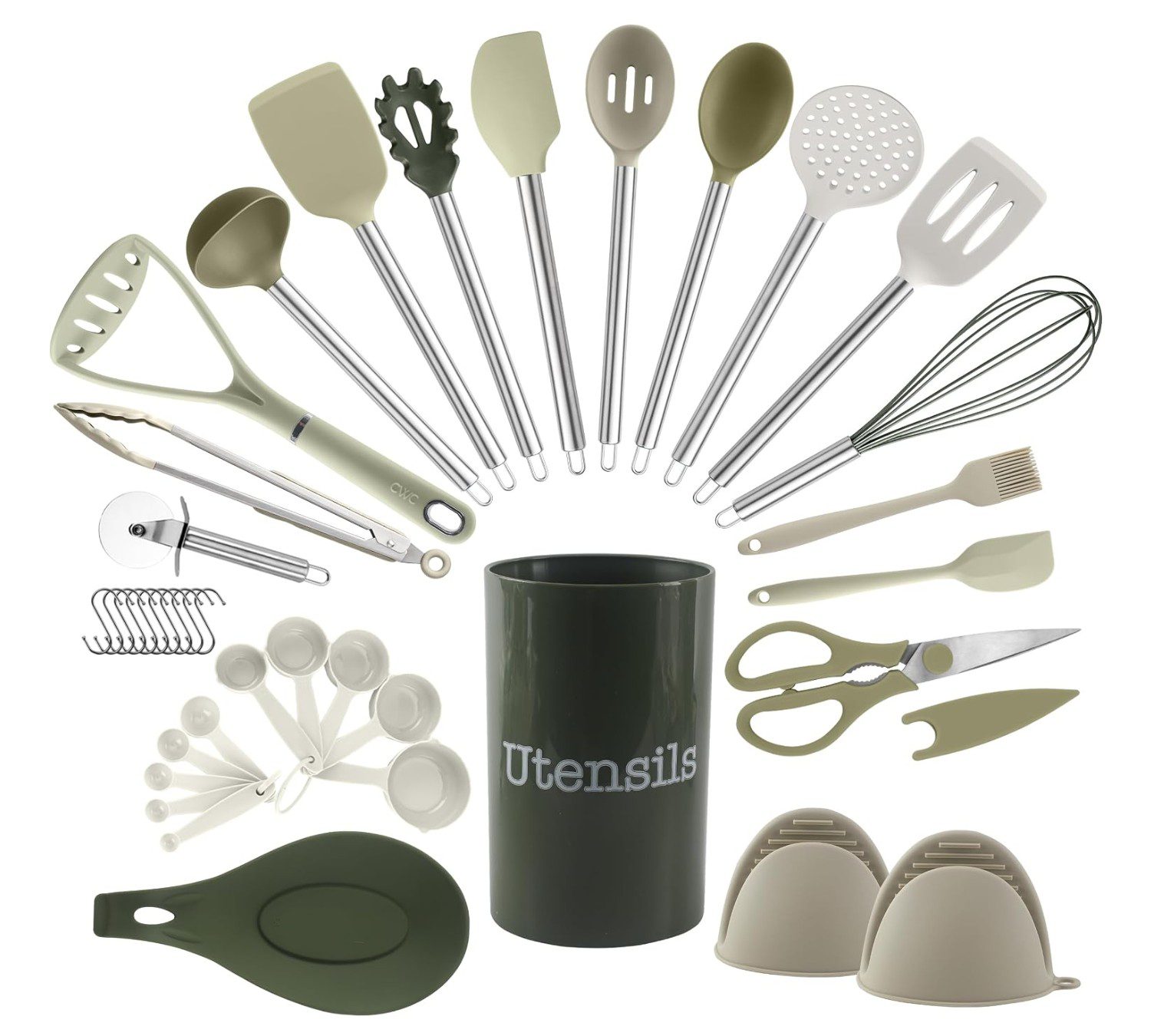
Red Cooking Utensils for Meat — kosher kitchen color-coded set

Red Utensils for Meat

Dedicated cooking tools for the meat side of the kitchen.

View Product
Blue Cooking Utensils for Dairy — kosher kitchen color-coded set

Blue Cooking Utensils for Dairy

Keeps the dairy side clearly separate at a glance.

View Product
Green Cooking Utensils for Pareve — kosher kitchen color-coded set

Green Cooking Utensils for Pareve

For the neither-meat-nor-dairy side of the kitchen.

View Product
Amazon Basics shop for Kitchen Sets on Amazon

Amazon Basics for the Budget Cook

Browse the full kitchen range on Amazon

Visit Store →

⏱️ Waiting Between Meat and Dairy

Not all meals can follow each other right away.

After eating dairy, the general practice is to wait around 30 minutes before eating meat. Going the other direction is a longer wait: after eating meat, kosher practice calls for waiting between 3 and 6 hours before eating dairy, since meat residue and taste linger in the mouth far longer than dairy does. If you eat meat often and don't want to think about the clock every time, the good news is there's now a huge range of pareve alternatives to dairy — pareve creamers, cheeses, and desserts — so you can skip the wait altogether by reaching for a pareve option instead.

🧺 Color-Coded Dish Towels & Kitchen Linens

Small details that keep a kosher kitchen running smoothly.

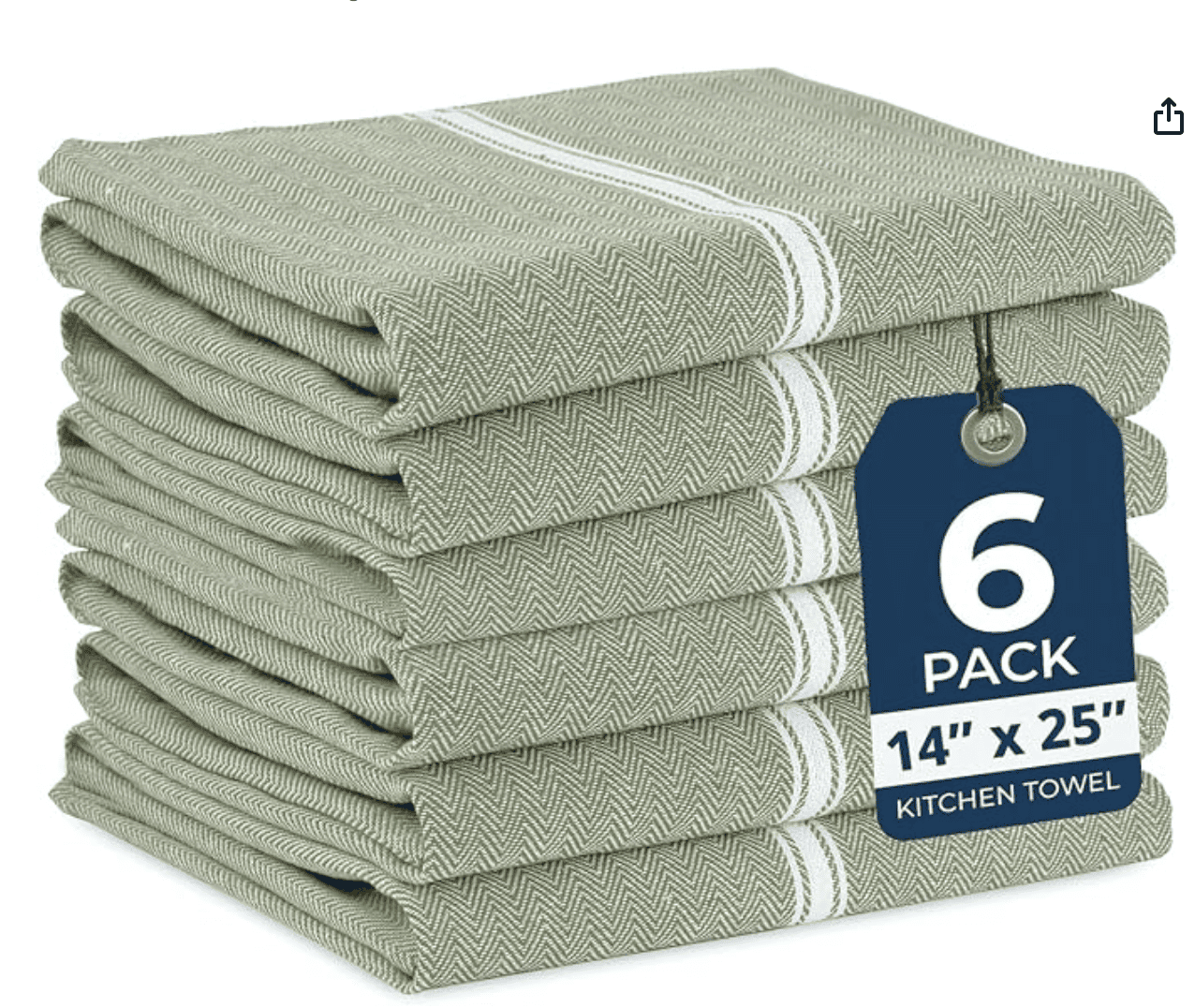
It's not just utensils and cookware — towels, dishcloths, and oven mitts pick up food residue too, and many kosher households extend the color-coding system to linens as well. Keeping a red towel by the meat side of the kitchen and a blue one by the dairy side removes any guesswork about which cloth touched what, especially when more than one person is cooking.
Red Dish Towel for Meat — kosher kitchen color-coded linen

Red Dish Towel — Meat

Keeps meat-side cleanup clearly marked.

View Product
Blue Dish Towel for Dairy — kosher kitchen color-coded linen

Blue Dish Towel — Dairy

The dairy-side match to the red set.

View Product
Green Dish Towel for Pareve — kosher kitchen color-coded linen

Green Dish Towel — Pareve

Completes the three-color kitchen linen set.

View Product
Lane Linen — Shop Kitchen Towels on Amazon

Lane Linen

Browse the full kitchen linen range on Amazon

Visit Store →
Tevilat Keilim blessing card — free printable from The Kosher Hub

🕯️ The Tevilat Keilim Blessing Card

Getting new dishes for your kosher kitchen? Print this free card for the blessing recited when immersing new metal or glass vessels — in Hebrew, transliteration, and English, with a few practical notes on when tevilah applies.

💧 Tevilah — Immersing New Vessels

A step many first-time kosher kitchens don't know about.

New metal or glass dishes, pots, and utensils that were made or previously owned by a non-Jewish-owned company traditionally need to be immersed in a mikvah before their first use — a practice called tevilat keilim. A blessing is recited during the immersion (see the printable card above), and many communities have a mikvah with a dedicated vessel-immersion tank, though it's often worth calling ahead since some require an appointment. Ceramic, wood, and unglazed stone items are generally treated differently — your local Rabbi or Kashrut Authority can walk you through exactly what needs tevilah and what doesn't.

🔪 Utensils and How They're Used

Why one mistake can retire a pot for good.

Once a utensil has been used with meat, it's considered a meat utensil going forward — and the same goes for dairy. If a dairy spoon accidentally stirs a pot of meat soup, that utensil is generally considered compromised, or "trefe," and can no longer be used for either category without a kashering process (which isn't always possible depending on the material). This is exactly why the color-coded system matters so much in practice — it removes the guesswork that leads to these mistakes in the first place, especially in a busy kitchen with more than one cook.
Pareve Green Nesting Bowls — kosher kitchen color-coded set

Pareve Green Nesting Bowls

Microwave-safe mixing bowl set, green diamond design.

View Product
Dairy Blue Cutting Board Set — kosher kitchen color-coded set

Dairy Blue Cutting Board Set

Blue and white marble design.

View Product
Red Digital Air Fryer for Meat — kosher kitchen color-coded set

Meat Red Digital Kitchen Air Fryer

Bake, fry, and reheat — red, for the meat side of the kitchen.

View Product
Cook With Color — Shop Color-Coded Kitchen Sets on Amazon

Cook With Color

Browse the full color-coded kitchen range on Amazon

Visit Store →

👨‍🍳 Rabbinic Supervision

Who's actually standing behind the products you buy.

Rabbinic supervision, or hashgacha, is what turns "this food seems fine" into "this food is certified kosher." A mashgiach — someone trained in the laws of kashrut — reviews ingredients and, for many products, is physically present overseeing production. That oversight is represented on packaging by a hechsher, a small symbol from the certifying agency. Below are a few of the most common ones you'll see on U.S. products.

🔎 Common U.S. Kosher Symbols

A quick-reference guide to hechshers you'll see on packaging.

Orthodox Union OU kosher symbol

OU

Orthodox Union

Star-K kosher certification symbol

Star-K

Baltimore, MD

OK Kosher certification symbol

OK Kosher

Brooklyn, NY

Kof-K kosher certification symbol

Kof-K

Teaneck, NJ

Chicago Rabbinical Council cRc kosher symbol

cRc

Chicago, IL

Ko Kosher Service symbol Philadelphia

Ko Kosher

Philadelphia, PA

Want the full international list, or have a question about a specific symbol?

See all recognized kosher symbols →  ·  Ask the Orthodox Union (OU) →

🛒 Parve, Labels & Buying Kosher

Reading between the lines on packaging.

Pareve is actually a huge category — far bigger than most people realize when they first hear the term. Because pareve foods work with either a meat or a dairy meal, they're the easiest building blocks in a kosher kitchen. A few examples:
  • Fresh fruit
  • Fresh vegetables
  • Grains & rice
  • Pasta (plain)
  • Eggs
  • Fish
  • Honey
  • Coffee & tea
  • Nuts & seeds
  • Most oils
  • Ketchup & mustard
  • Jams & jellies
  • Pareve margarine
  • Pareve non-dairy creamer
  • Pareve cheese alternatives
  • Pareve chocolate
  • Pareve baked goods
  • Spices & dried herbs
  • Sugar
  • Plant-based milks (check certification)

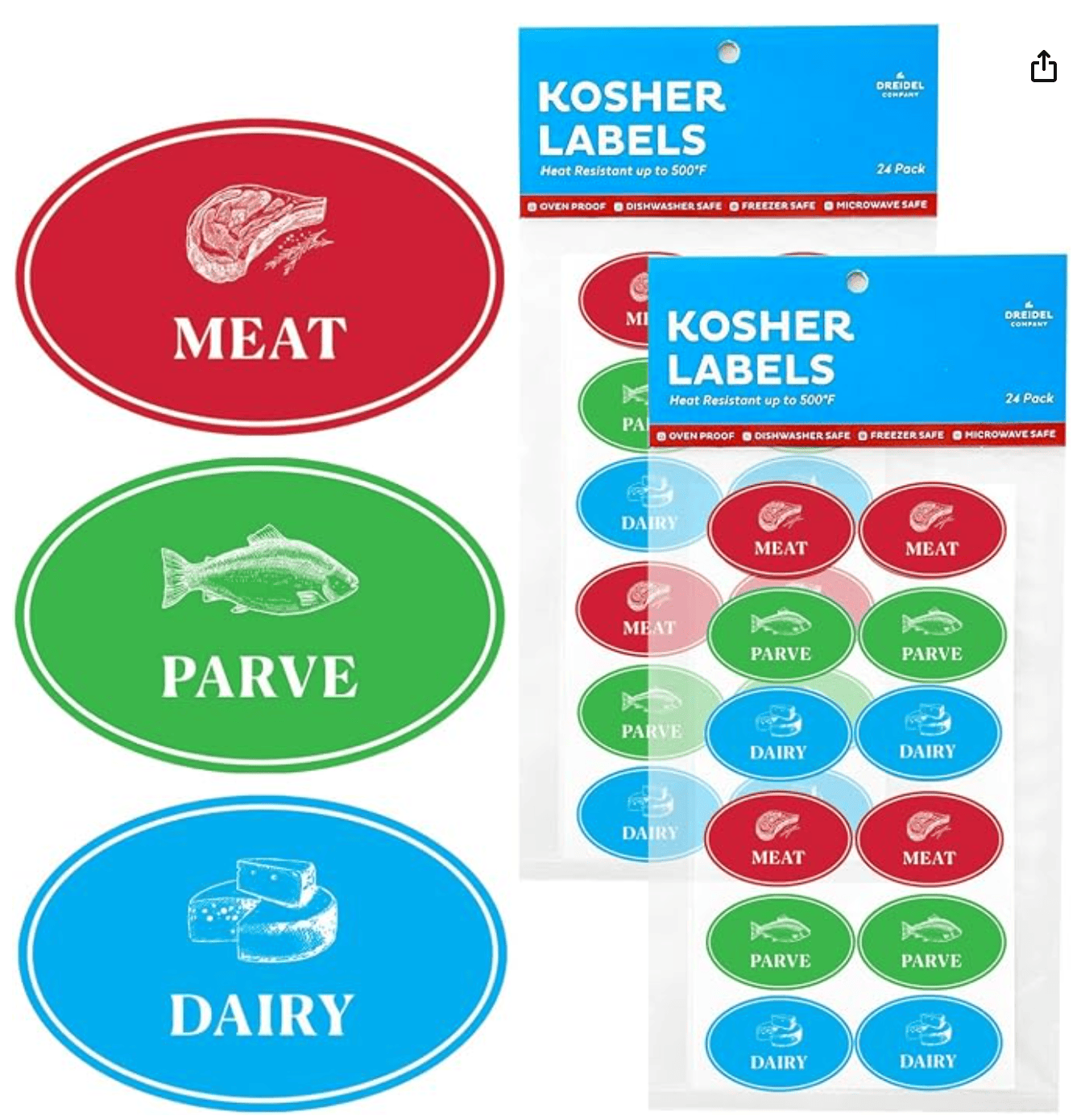
Even though these fall in the pareve category, many still need rabbinic supervision — additives like gelatin, certain emulsifiers, or flavorings can quietly turn a seemingly pareve item into something that needs closer checking. This is exactly why a hechsher matters even on foods that look simple. Fish is a great example of a pareve category with its own rules worth understanding — see our full Kosher Fish guide. And if you're eating out, our Kosher Restaurant Guides cover pareve and dairy-friendly spots city by city. Clear kitchen labels help at home too — marking containers and leftovers as meat, dairy, or pareve takes the guesswork out of a busy fridge or pantry, especially when more than one person is cooking or storing food.
Smart Labels — kosher kitchen meat dairy pareve labels

Smart Labels

Simple, reusable labels for marking meat, dairy, and pareve.

View Product
Kosher Labels 3-Pack by The Dreidel Company — kosher kitchen labels

Kosher Labels 3-Pack — The Dreidel Company

A full three-color set for meat, dairy, and pareve.

View Product
Assorted Kosher Labels by The Dreidel Company — kosher kitchen labels

Assorted Kosher Labels — The Dreidel Company

A broader assortment for pantry and fridge organization.

View Product
Label Land — Shop Color-Coded Kitchen Sets on Amazon

Label Land

Browse the full color-coded kitchen range on Amazon

Visit Store →

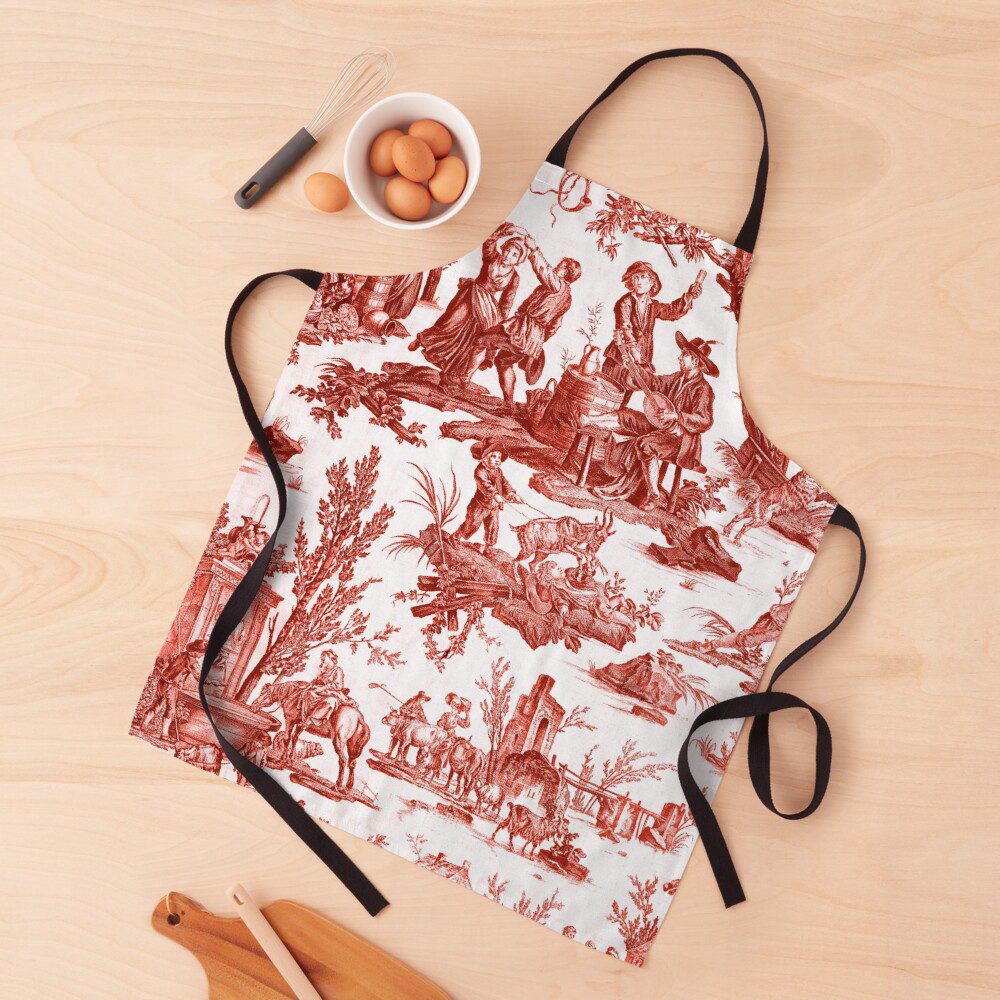
From Our Own Shop: Classic Print Color Coded Aprons

Designed by The Kosher Hub — a classy, visible way keep your kitchen kosher.

Blue Toile Apron for dairy — The Kosher Hub Redbubble shop

Blue Toile de Jouy Apron

Shop Apron
Kosher Meat Only Apron — The Kosher Hub Redbubble shop

Red Toile de Jouy Apron

Shop Apron
Green toile de jouy apron for pareve cooking— The Kosher Hub Redbubble shop

Green Toile de Jouy Apron

Shop Apron

🍷 What's Different About a Kosher Kitchen at Passover

A whole extra layer on top of year-round kashrut.

During Passover, an entirely separate set of rules applies on top of everyday kashrut: chametz (leavened wheat, barley, rye, oats, and spelt) is avoided completely, which means many everyday kosher products aren't automatically kosher for Passover (KFP) — they need their own specific certification. Many households also switch to dedicated Passover dishes, cookware, and utensils for the week, separate from their everyday meat, dairy, and pareve sets. The chametz clean-out beforehand is a project in itself — we've put together a full step-by-step walkthrough in our Passover Cleaning Checklist if you're getting the kitchen ready.
Kosher for Passover Page

Kosher for Passover Cleaning Products

Browse a range of KFP products

Visit Page →

🤝 Briefing Household Help & Family

A few minutes of setup saves a lot of mix-ups later.

Anyone else cooking or cleaning in a kosher kitchen — family members, guests, or household help — benefits from a quick, clear briefing: which color goes with which category, where each set lives, and what to do if something gets mixed up (generally: stop, set it aside, and ask, rather than guessing). The clearer the system looks — labels, colors, distinct storage — the easier it is for anyone to follow it correctly without needing to memorize the underlying laws themselves.

✅ What to Look For

Building or upgrading your kosher kitchen setup.

A well-run kosher kitchen usually comes down to a few consistent habits rather than any single product: a clear color system carried across utensils, cookware, and linens; dedicated storage so meat and dairy items are never touching or stacked together; reliable hechshers checked on packaged and prepared foods, not just fresh ingredients; a plan for tevilah on new metal or glass purchases; and, once a year, a full pivot to Passover-specific supplies and cleaning. None of these require an elaborate renovation — most kosher kitchens are built up gradually, one labeled shelf and one color-coded drawer at a time.
The Dreidel Company — Shop Kosher Kitchen Labels on Amazon

The Dreidel Company

Browse the full kosher labeling range on Amazon

Visit Store →

❓ Kosher Kitchen FAQ

What makes a kitchen "kosher"?

A kosher kitchen keeps meat and dairy completely separate (dishes, utensils, and often cookware), uses only ingredients and products with reliable kosher certification, and follows practices like tevilah for new metal or glass vessels. It's a set of consistent habits more than any single product.

Why do I need separate dishes for meat and dairy?

The separation of meat and dairy is a foundational kosher practice, traditionally traced to a verse repeated three times in the Torah. Over time this expanded into keeping cookware, utensils, and even sponges and towels separate for each category.

How long should I wait between eating meat and dairy?

After dairy, the general practice is to wait around 30 minutes before eating meat. After meat, the wait is longer — typically 3 to 6 hours before eating dairy. Many people simply reach for a pareve alternative instead of waiting.

What does parve (pareve) mean?

Parve refers to foods that are neither meat nor dairy — most fruits, vegetables, grains, eggs, and fish — and can be used alongside either category. Some parve-labeled items still need rabbinic supervision to confirm certain additives haven't changed their status.

Do I need to immerse (tevilah) all new dishes?

Generally, new metal or glass vessels made or previously owned by a non-Jewish-owned company require tevilah before first use, while ceramic, wood, and unglazed stone are treated differently. Your local Rabbi or Kashrut Authority can confirm specifics for a given item.

How do I know if a packaged food is kosher?

Look for a recognized hechsher (kosher certification symbol) on the packaging, such as OU, OK, Star-K, Kof-K, or cRc. The symbol represents an agency or rabbi standing behind that product's kosher status.

What's different about a kosher kitchen at Passover?

During Passover, chametz (leavened grain products) is avoided entirely, everyday products often need separate Passover-specific certification, and many households switch to dedicated Passover dishes and cookware for the week.

📦 Looking for more options? Browse our full Kosher for Passover Food List or explore Kosher Restaurant Guides for more from The Kosher Hub.
The Kosher Hub is not a Kosher Authority. For any advice please refer to your local Kashrut Authority.
As an Amazon Affiliate we earn from qualifying purchases.

Other Kosher Posts That May Interest You

Alfredo Sauce
Best Kosher Alfredo Sauce on Amazon
Finding a genuinely good kosher alfredo sauce on Amazon used to mean squinting at hechsher symbols on...
Read More
Kosher salt substitute
Kosher Salt Substitute
Running low on kosher salt mid-recipe? A good kosher salt substitute is easy to find in almost any kitchen...
Read More
Kosher Salt on table in bowl
The Best Kosher Salt on Amazon
Not all kosher salt is created equal — and if you’ve ever grabbed the wrong grind for baking or...
Read More
Best Kosher Pickles for Sandwiches
Best Kosher Pickles for Burgers & Sandwiches
The Best Kosher Pickles for Burgers and Sandwiches Crunchy, tangy and full of bite, kosher pickles are...
Read More
Best Kosher Gelatin on Amazon
Best Kosher Gelatin on Amazon Kosher gelatin can be hard to shop for because not every “gelatin” product...
Read More
Best Whole Kosher Dill Pickles on Amazon
Whole kosher dill pickles are ideal if you want that classic deli-style crunch, bigger bite, and stronger...
Read More
KFP ketchup banner
Kosher Ketchup
Kosher ketchup is a pantry staple, but not every bottle is automatically suitable. From classic tomato...
Read More
Kosher Olive Oil Kosher for Passover on Amazon
Kosher Olive Oil
Kosher olive oil is a pantry essential, but not every bottle is automatically suitable. From extra virgin...
Read More
Kosher Honey The Kosher Hub
Kosher Honey
Honey is one of those foods that seems simple and naturally kosher, but once you get into commercial...
Read More
Kosher Jello
Kosher Jello
Kosher jello is a gelatin-based dessert that meets kosher dietary laws, but not all jello qualifies due...
Read More
Kosher Chinese
Kosher Chinese
Kosher Chinese food follows traditional Chinese cooking styles but uses only kosher-certified ingredients...
Read More
Kosher Sushi
Kosher Sushi
Kosher sushi can be tricky because while fish itself may be kosher, the preparation process often introduces...
Read More