
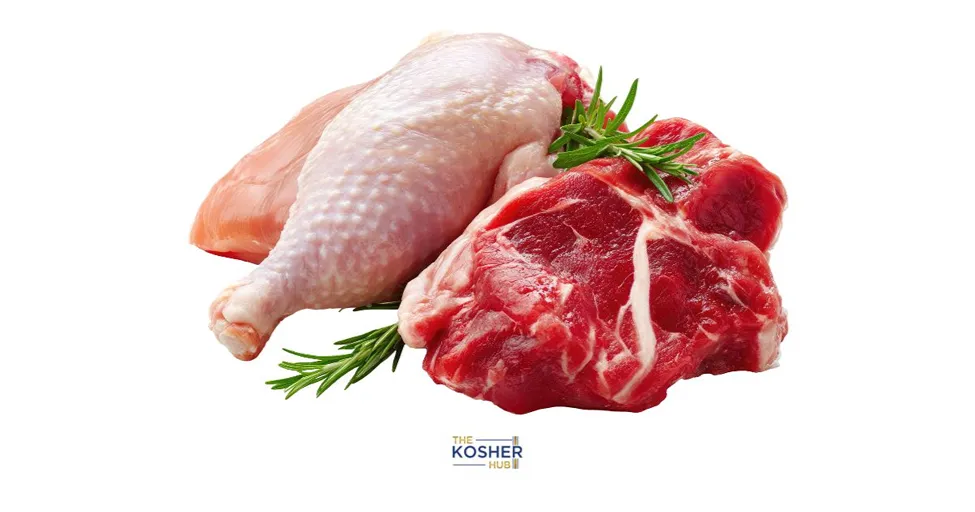
Kosher meat is more than meat from the right animal. It has to be slaughtered, inspected, salted and certified under the supervision of a recognised kosher authority before it reaches your plate, and it then has to stay completely separate from dairy. This guide to kosher meat brings the essentials together in one place, from what makes meat kosher to how meat, dairy and pareve foods fit together in a kosher kitchen.
Our shopping focus is on kosher meat you can have delivered to your door: glatt kosher beef and chicken meals, plus kosher beef jerky for snacking. Every food product we feature is checked for kosher certification first, and each section links to the full guide with brand comparisons and links on Amazon. Planning for Pesach? Our Kosher for Passover meat meal is featured near the end, and we link to the OU's own guides throughout if you want to read further. New guides are added as this page grows.
🛒 Shop Kosher Meat by Category
Pick a category to jump straight to the guides.
Delivered
Jerky
& Toppings
Meat Kosher
& Pareve
Kitchen
Passover
🥩 Kosher Meat Meals Delivered
Glatt kosher beef and chicken meals, delivered to your door.
Beef & chicken meals
Delivered meals are the simplest way to put kosher meat on the table when there is no kosher butcher nearby. Our picks come from KJ Poultry, whose glatt kosher range includes beef goulash, stuffed cabbage rolls, beef cholent and chicken dishes. These are meat (fleishig) meals, so serve them with pareve sides and keep dairy off the table. Check each listing for the certification before you order.

🍖 Kosher Beef Jerky
A certified kosher meat snack.
Meat snacks
Beef jerky is a convenient high-protein snack, but it is still a meat product. It is only kosher when it carries a reliable hechsher, so check the packaging rather than assuming. Treat it like any other meat: do not eat it with dairy, and follow your usual waiting time before dairy foods.
🌭 Hot Dogs & Toppings
Hot dogs, buns, mustard and toppings.
Hot dogs
Buns, mustard & toppings
Hot dogs are a family favorite and always a meat product, so the rest of the plate needs to stay dairy-free. Our guides cover the buns, mustard and toppings that go with them, and each one is checked for certification. Skip cheese and cream-based toppings when meat is on the menu.
📖 What Makes Meat Kosher
Shechita, inspection, salting and glatt explained.
Kosher animals. Kosher mammals must chew their cud and have cloven hooves, which includes cattle, sheep, goats and deer. Pork is never kosher. Common poultry such as chicken, turkey and duck can be kosher, but only if prepared in the prescribed way.
Shechita (slaughter). The animal must be slaughtered by a trained shochet using a perfectly smooth, razor-sharp blade that cuts the trachea and esophagus in a single motion.
Bedika (inspection). After slaughter the animal is checked, including the lungs. Glatt literally means “smooth”: the lungs had no questionable adhesions. Per the OU, the term applies to animals, not to poultry, and it is now often used for a higher level of kosher supervision.
Nikkur and salting. Forbidden fats and veins are removed, then the meat is soaked, covered in coarse salt and rinsed to draw out the blood. Under Jewish law this must be done within 72 hours of slaughter. That coarse salt is where the name “kosher salt” comes from.
A reliable hechsher. Because kosher meat is only kosher after every step is done correctly, supervision matters. Look for the symbol of a trusted certifier, such as the OU, on the package.
Read more from the OU
Kosher meat has one of the longest chains of supervision of any food, which is why certification is the single most important thing to check. The OU guides above explain each step in detail, and your local Kashrut Authority is the final word on any question.
🚫 Meat, Dairy & Pareve
Why meat and dairy never mix, and what pareve means.
Meat and dairy are never combined. According to the OU, the Torah forbids cooking meat and milk together, eating them cooked together, or benefiting from them. The Rabbis extended this to eating meat and dairy at the same meal and preparing them on the same utensils. That means no cheeseburgers, no cream sauce on a meat dish and separate pots, dishes and cutlery for each.
Waiting between meat and dairy. After eating meat, the most prevalent custom is to wait six hours before dairy, though communities differ. Customs for waiting after dairy before meat are shorter and also vary, so ask your rabbi what your family follows.
Meat can only be eaten with pareve. Pareve foods contain no meat or dairy and may be eaten with either. Fruits, vegetables and grains in their natural state are pareve, so they make natural sides for a meat meal. A pareve food cooked or heated with meat becomes a meat food, and a pareve product made on dairy equipment is labeled with a D, so check before serving it alongside meat.
Know your symbols. On OU products, a plain OU means pareve, while OU-M and OU-Glatt mark meat and OU-D marks dairy. Always read the full label.
Read more from the OU
The simplest rule for a meat meal is to build the plate from meat and pareve foods only. Keep dairy for another meal, and keep the two sets of kitchen equipment apart.
🔴 Kosher Kitchen for Meat
Color-coded red for meat, plus labels to keep it all straight.
Utensils, labels & appliances
Keeping meat and dairy apart is far easier with a color-coding system. Red is widely used for meat, with blue for dairy and green for pareve, so a red spatula or oven mitt immediately tells everyone which side of the kitchen it belongs to. Labels on shelves, containers and sponges back this up, and they are especially helpful for guests and helpers who do not know your kitchen.

🌿 Kosher for Passover
Everything for Pesach, in one place.
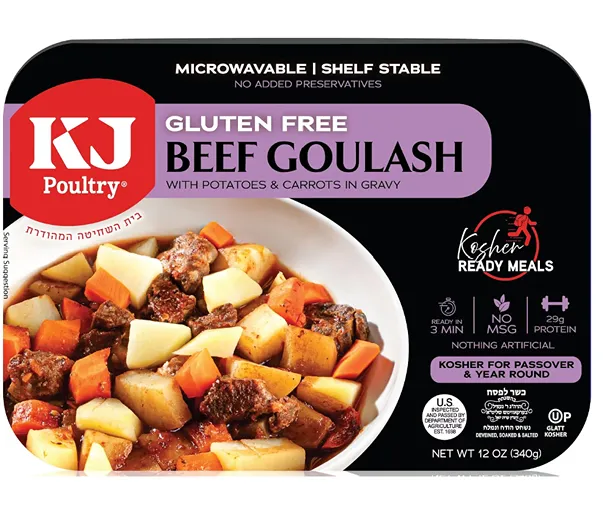
Passover shopping follows stricter rules than the rest of the year, so we keep every Kosher for Passover product together on one dedicated page. Browse our full Passover guide, or take a look at our featured Kosher for Passover meat meal below.
Featured Kosher for Passover meat meal

🔎 What to Look For When Buying Kosher Meat
A quick checklist before you order.
A recognised hechsher. Look for the symbol of a trusted certifier on every package. If you cannot see one in the listing photos or description, do not assume the product is kosher.
Meat, dairy or pareve marking. Meat products are marked with an M or the word meat, dairy with a D, and pareve products usually have no extra letter. Make sure a meat product is not served alongside dairy.
Glatt where it matters to you. Glatt kosher is widely sought for beef and lamb. It describes the lungs of the animal, so it does not apply to poultry in the same way.
Kosher for Passover status. Pesach needs its own certification. Reconfirm it each year unless the product carries a permanent Passover symbol.
Your local Kashrut Authority. Customs differ between communities. When in doubt, ask your rabbi.

❓ Kosher Meat FAQ
Quick answers to the most common questions.
What makes meat kosher?
Meat is kosher when it comes from a kosher animal, is slaughtered by a trained shochet, passes inspection, has forbidden fats and veins removed and is soaked and salted to remove blood. It then needs reliable kosher certification. The OU's Kosher Primer explains each step.
What does glatt kosher mean?
Glatt means smooth. It refers to the lungs of the animal having no questionable adhesions, and it is now commonly used to describe a higher level of kosher supervision. According to the OU, it applies to animals rather than to poultry.
Can you eat meat and dairy together?
No. Kosher law forbids cooking or eating meat and dairy together, and the Rabbis extended this to the same meal and the same utensils. Meat meals are served with pareve foods instead.
How long do you wait between meat and dairy?
The most prevalent custom is to wait six hours after eating meat before eating dairy, though communities have different customs. The wait after dairy before meat is shorter and also varies, so ask your rabbi what applies to you.
What does pareve mean and can it be eaten with meat?
Pareve foods contain no meat or dairy and can be eaten with either. Fruits, vegetables and grains in their natural state are pareve. A pareve food made on dairy equipment may carry a D, so check the label before serving it with meat.
Can I buy kosher meat meals online?
Yes. Glatt kosher beef and chicken meals from KJ Poultry can be delivered through Amazon. Always check the certification shown on the listing before you order.
Is beef jerky kosher?
Beef jerky is only kosher when the beef is kosher and the product carries a reliable hechsher. It is a meat product, so it should not be eaten with dairy.
The Kosher Hub is not a Kosher Authority. For any advice please refer to your local Kashrut Authority.
As an Amazon Affiliate we earn from qualifying purchases.







Understanding Our Kosher Certifications
The Kosher Hub references products certified by recognized kosher authorities, including OU, OK, Star-K, Kof-K, and CRC. Certification symbols and status can change, so always confirm the current kosher status directly on the product packaging or via the certifying agency's own listings before purchasing.