
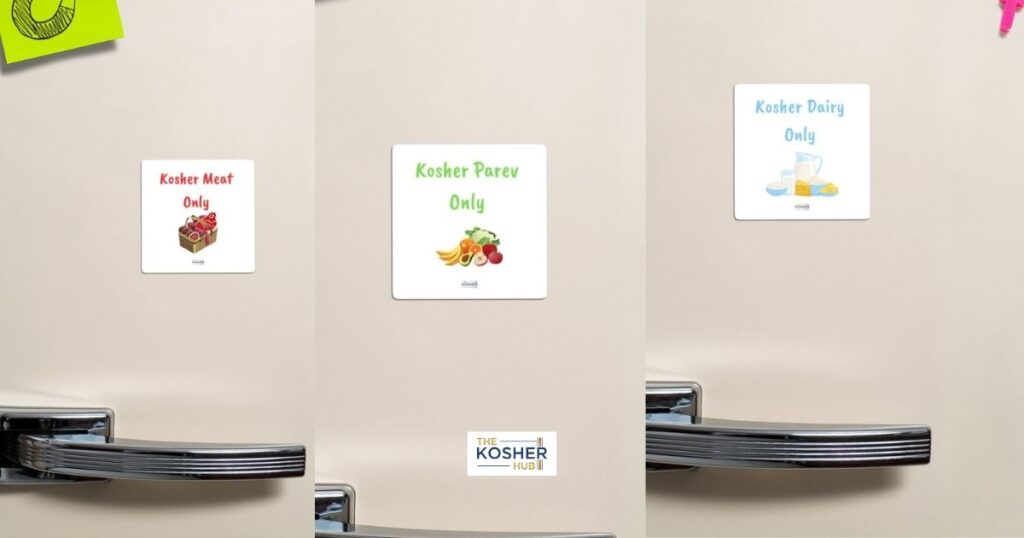
If you keep a kosher kitchen, you already know the drill: meat pots go here, dairy pots go there, and pareve gets its own shelf — but the second you introduce roommates, kids, grandkids, or a busy holiday crew into the mix, that system can fall apart fast. That's where kosher labels come in. I researched color-coded, pre-printed sticker sets designed specifically for kosher kitchens, and I'm sharing the ones that actually hold up to dishwasher cycles, freezer temps, and daily use — in English, Hebrew, and Spanish. I'm also including a set of fridge magnets from my own shop that make meat, dairy, and pareve zones impossible to mix up at a glance. Whether you're labeling storage containers, cutting boards, or a whole cabinet of mixing bowls, these picks take the guesswork out of keeping meat, dairy, and pareve exactly where they belong. Below I'll walk through my picks, what to look for before you buy, and answers to the questions I get asked most about kosher kitchen labeling.
🏷️ Label Land Color-Coded Kosher Labels
Meat, dairy, and pareve — sorted at a glance.
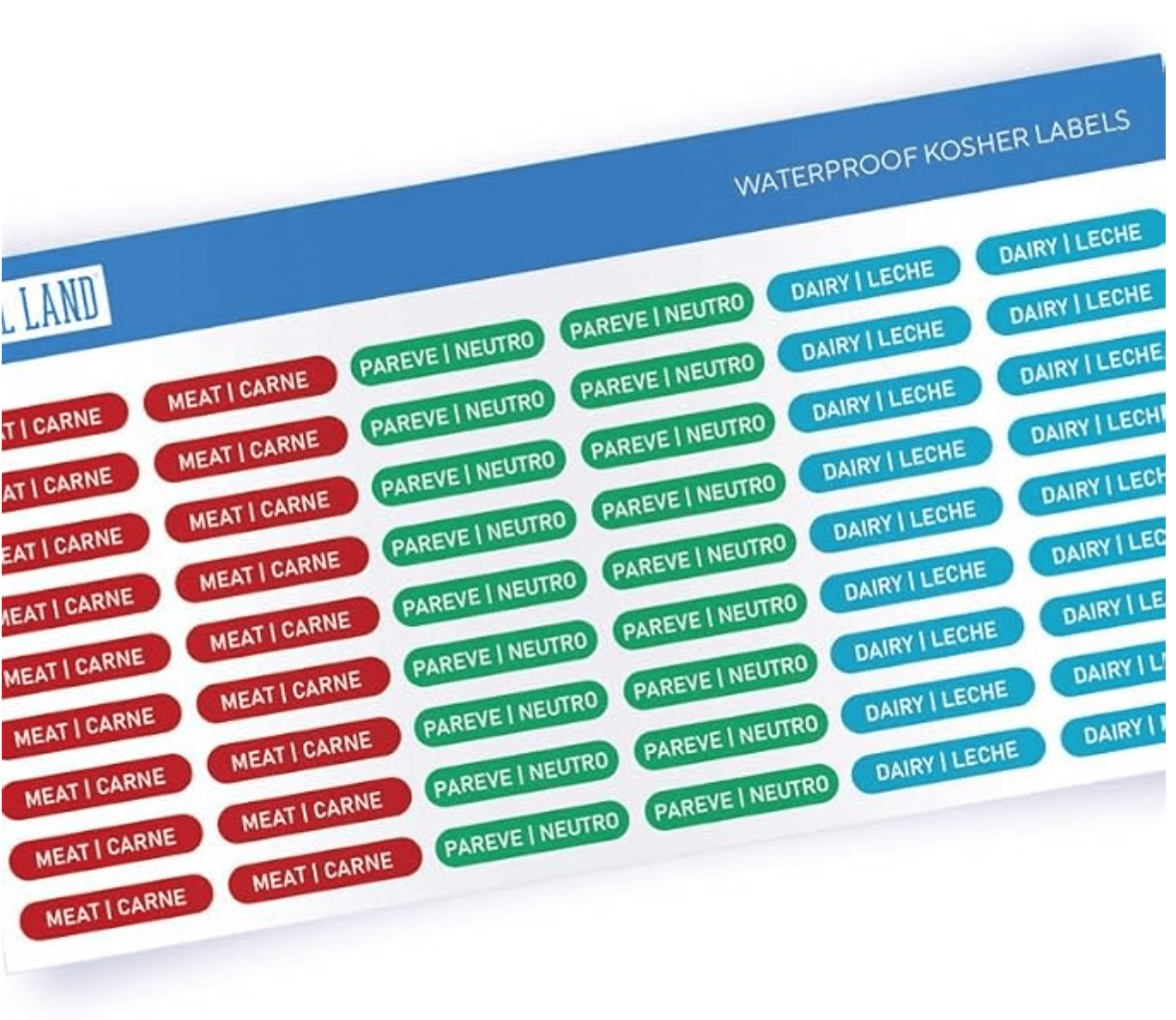
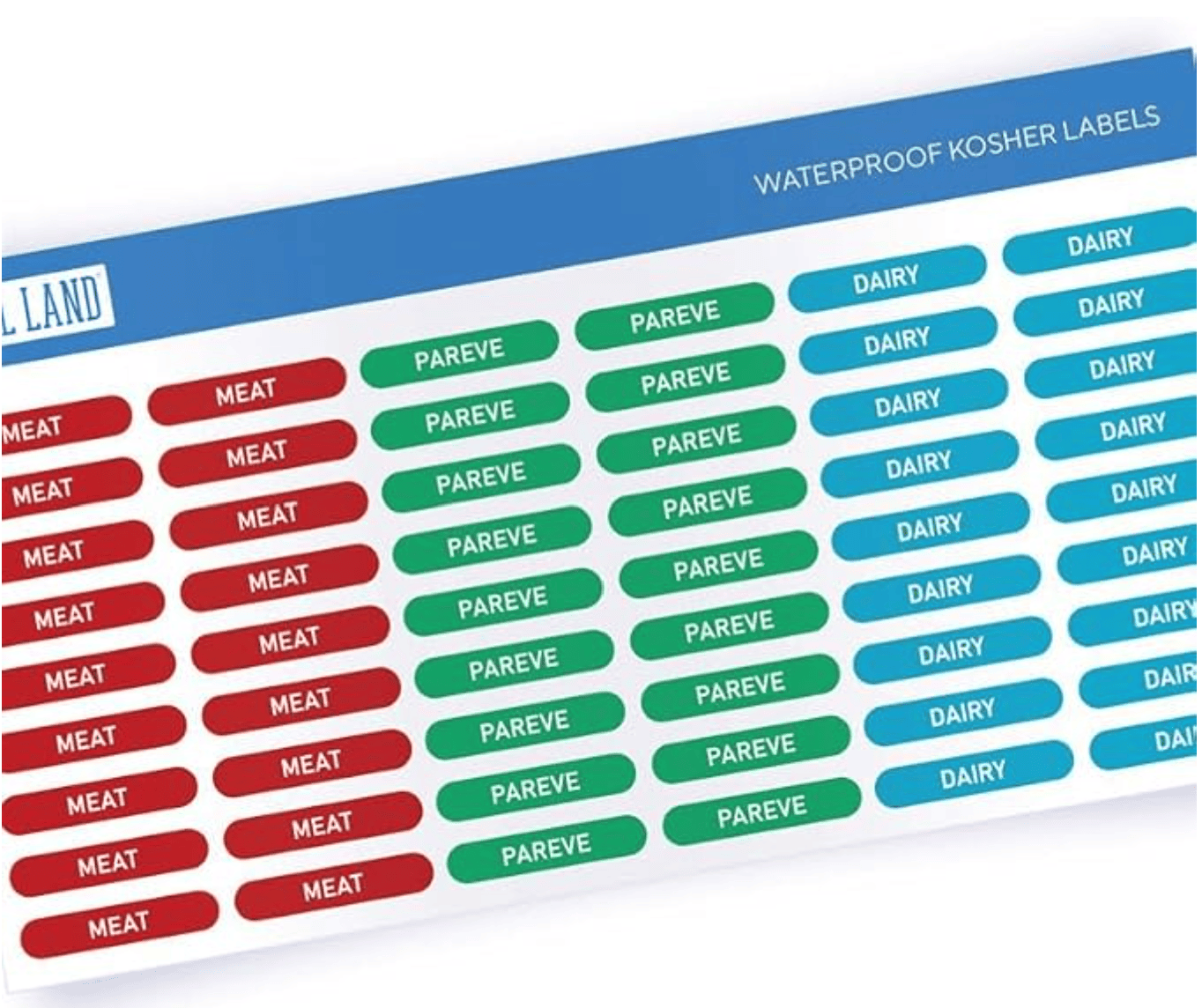
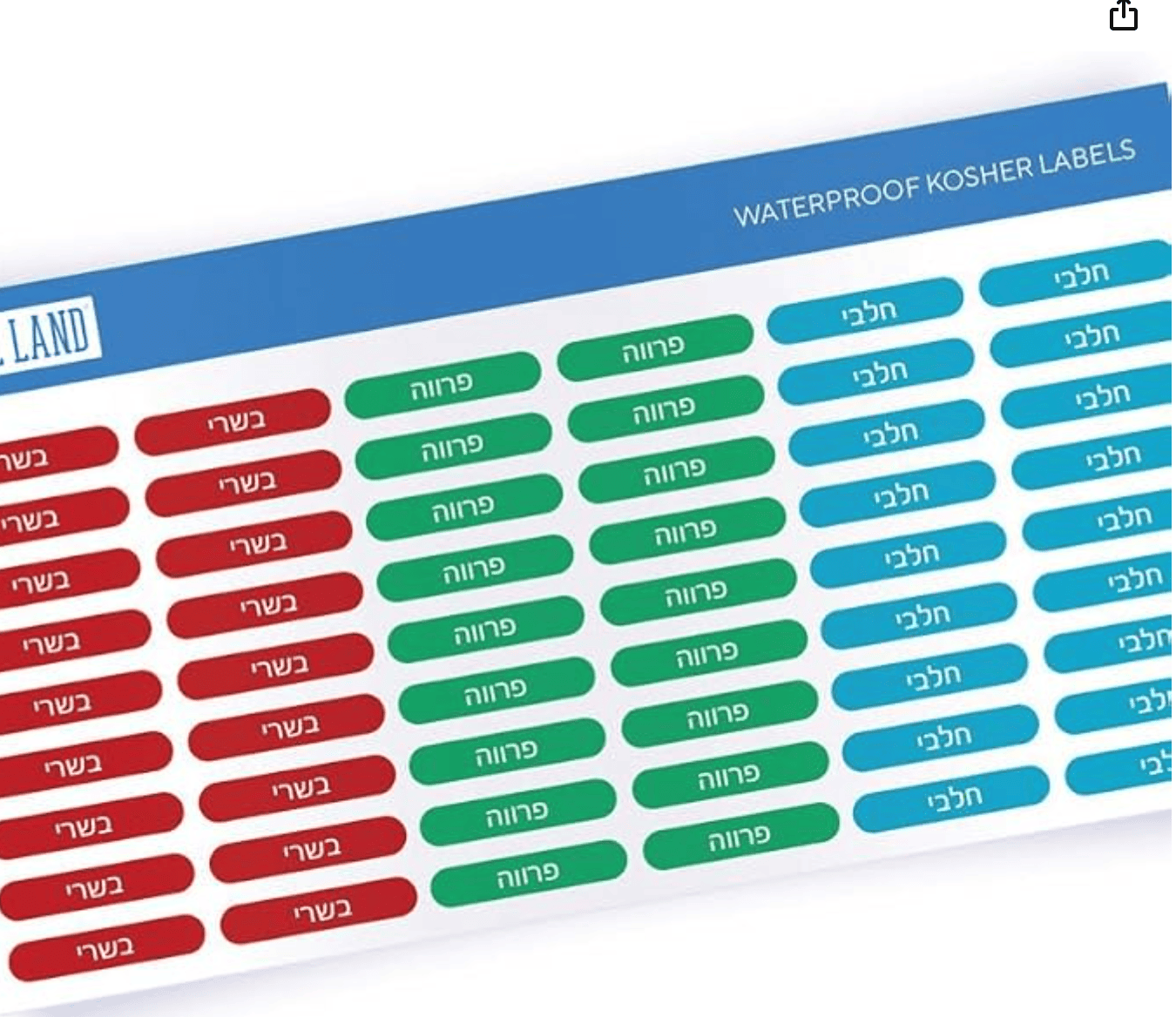
All three of these sets from Label Land use the same red-blue-green system — red for meat (basari), blue for dairy (chalavi), and green for pareve — so even a guest or babysitter who's never set foot in your kitchen before can figure out the system in seconds. The bilingual Spanish/English set is a great fit if your household or extended family speaks Spanish at home, while the Hebrew set is a natural choice if you want the labels to match the language used at shul or in Hebrew school. Each pack is rated dishwasher, freezer, and microwave safe, so they're built to survive daily kitchen use rather than peeling off after a wash or two. I'd recommend starting with one 108-pack per kitchen — that's enough to label everyday containers, cutting boards, and a few small appliances without running out.

🏷️ More Kosher Labels to Consider
More sizes and styles for every kosher kitchen.
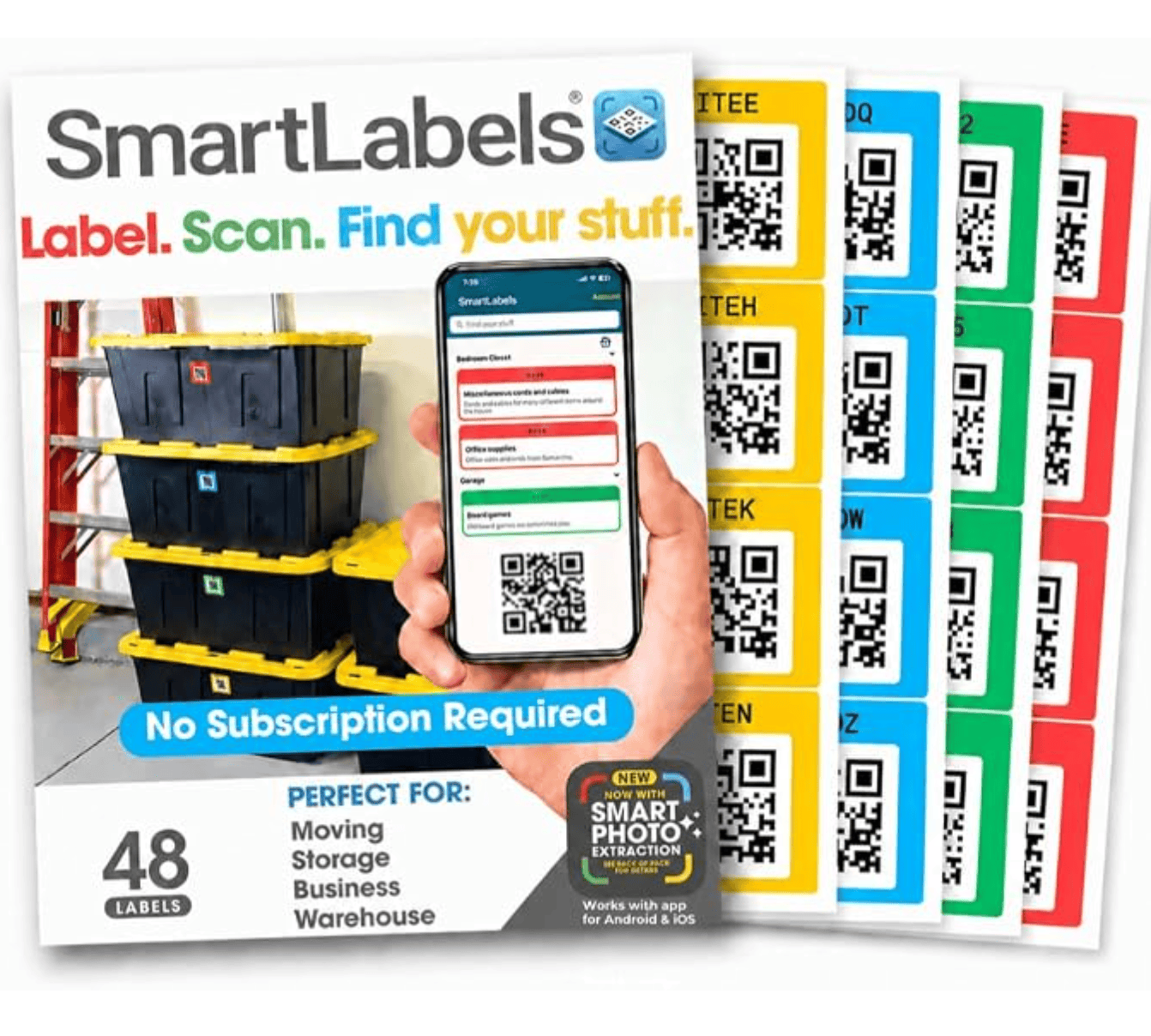
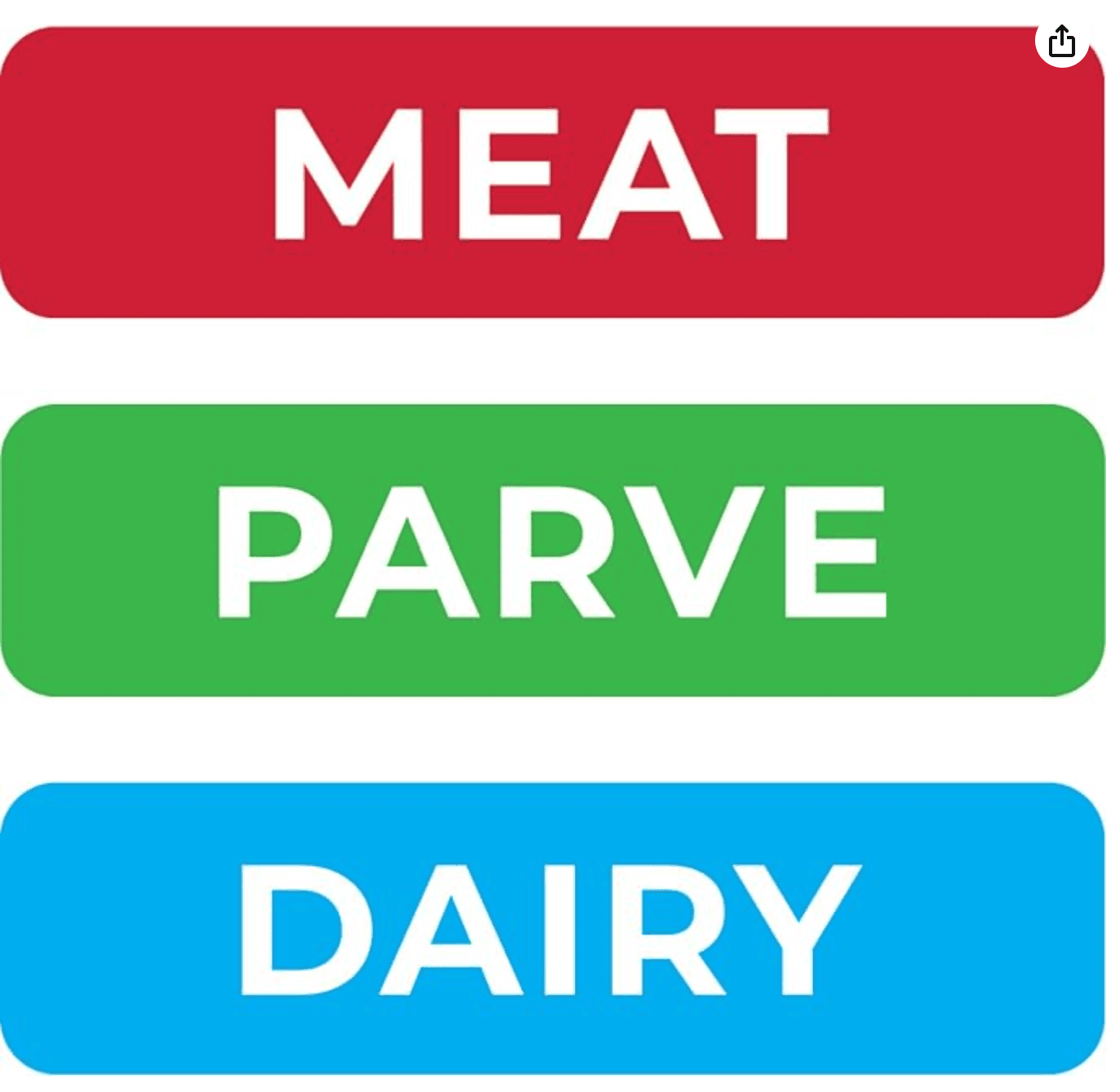
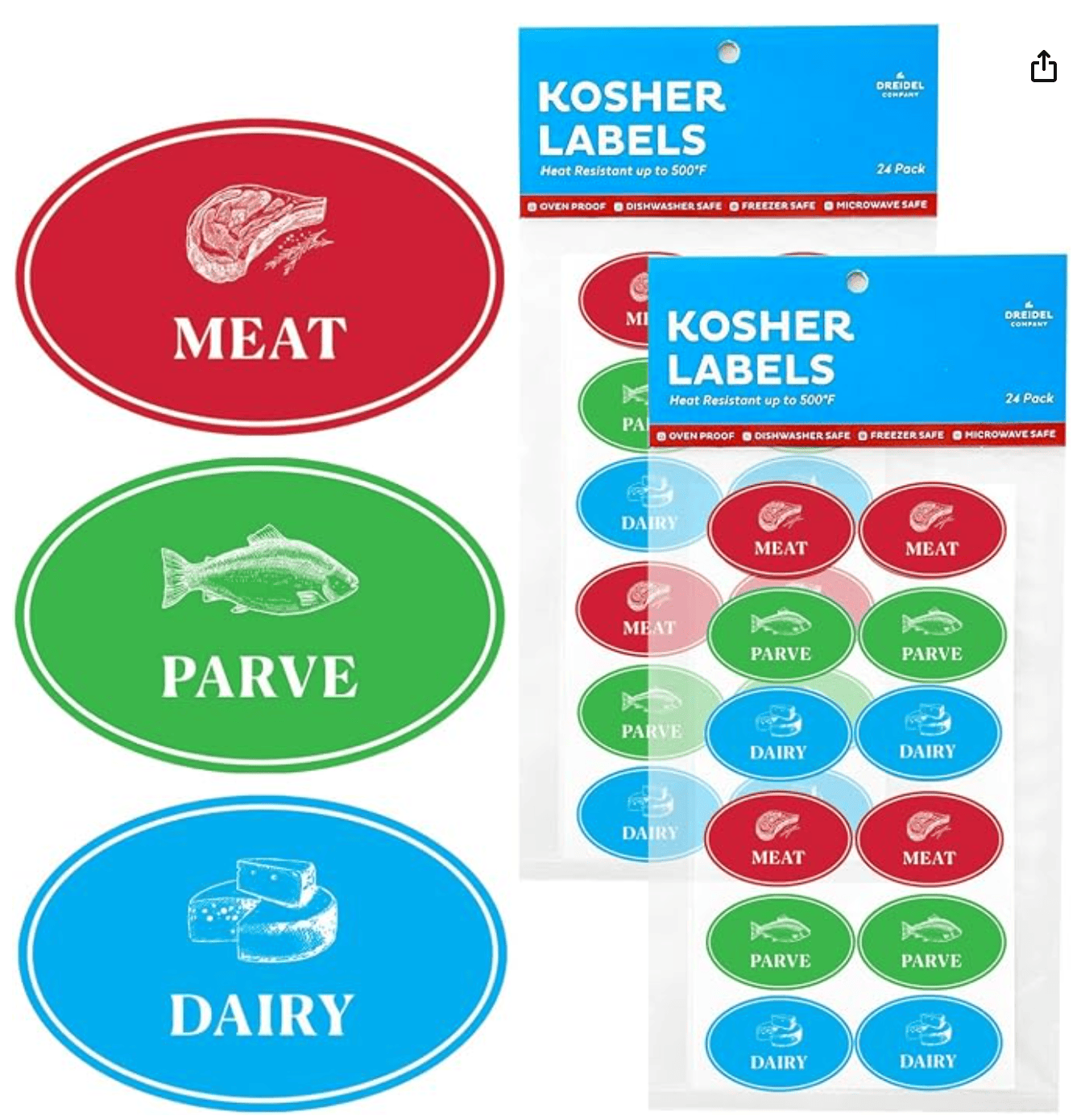
If you'd rather compare a couple of brands before committing to one, these are worth a look. The Dreidel Company's kosher labels are built to hold up to real heat — rated oven-safe up to 500°F alongside their freezer and dishwasher ratings, which makes them a solid pick if you plan to label bakeware or roasting pans and not just fridge containers. Smart Labels follows the same red/blue/green convention as the rest of the market, so mixing brands within one household won't cause confusion as long as everyone sticks to the same color system.

🧲 Kosher Kitchen Fridge Magnets
From my own Redbubble shop — mark your zones in style.
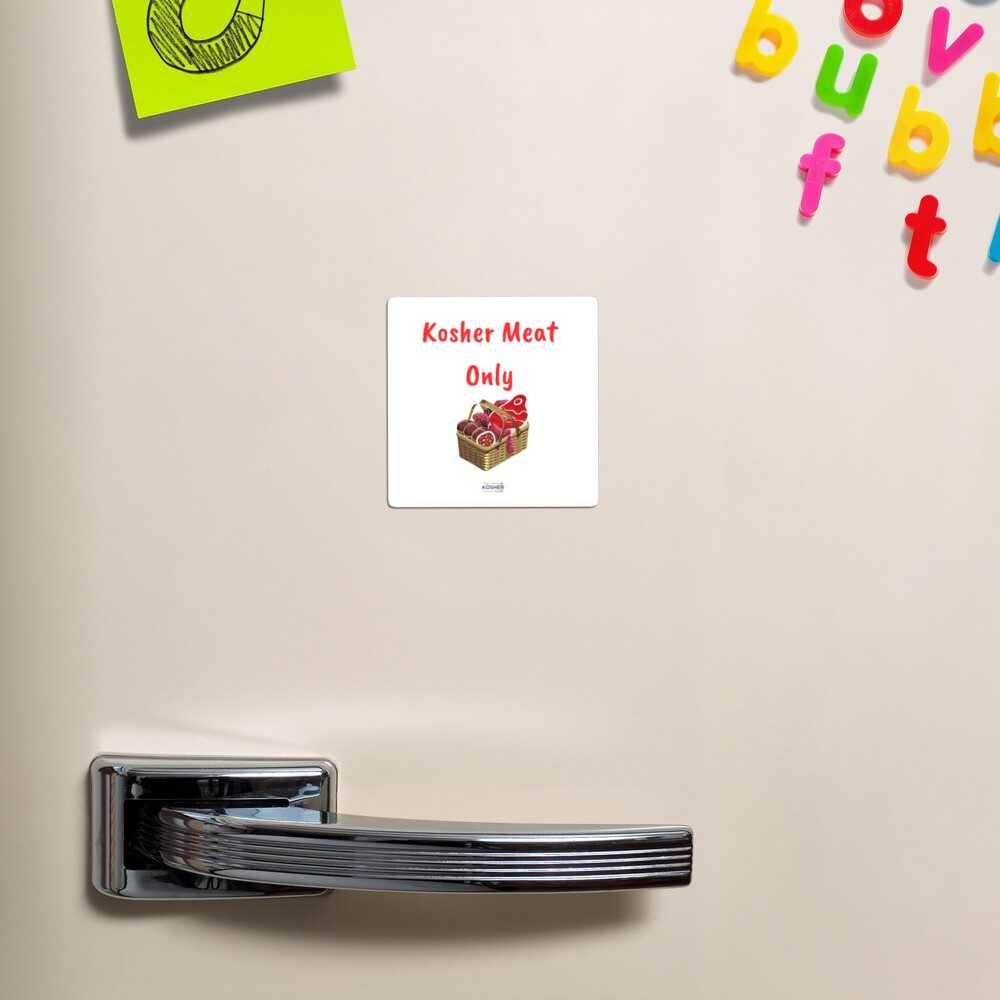
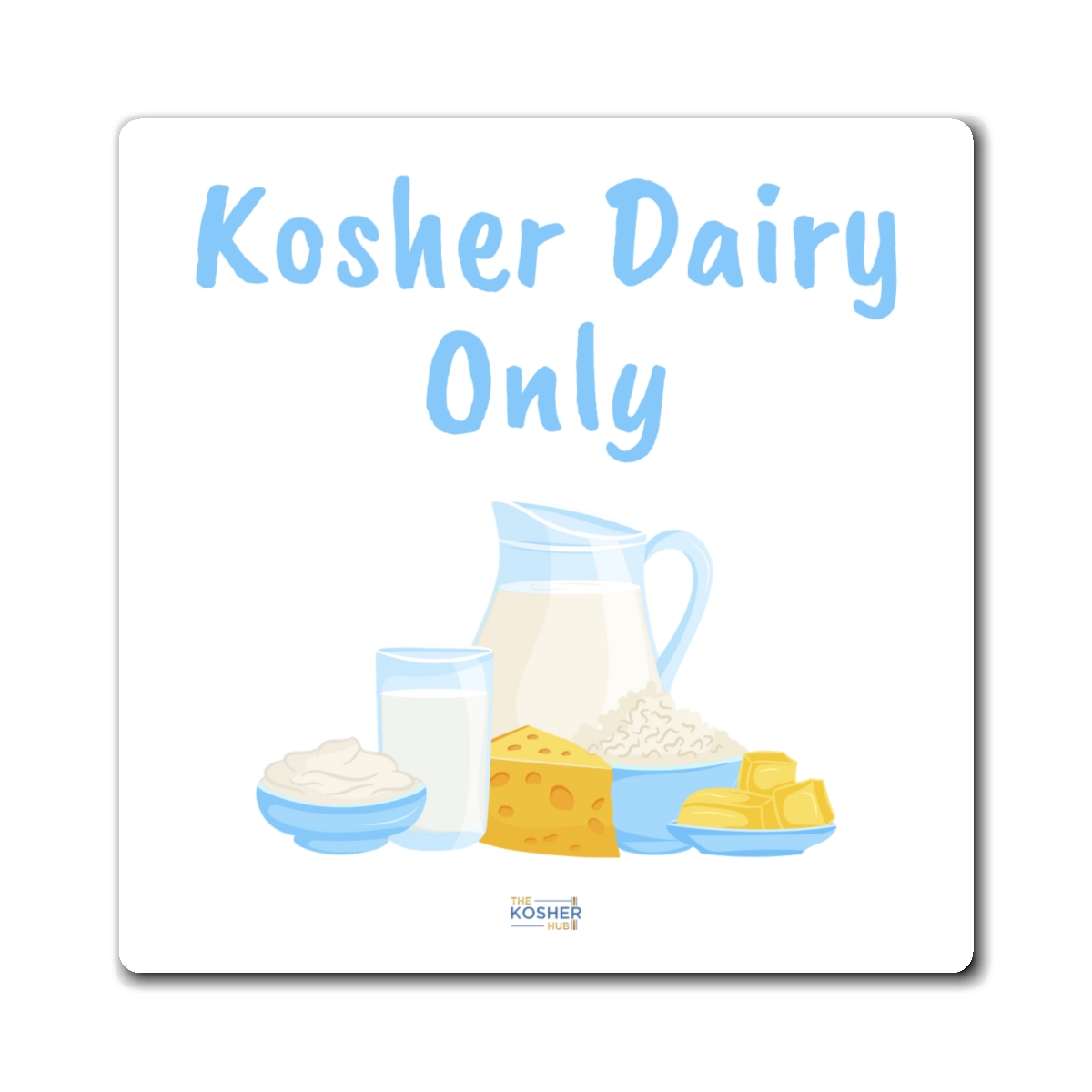
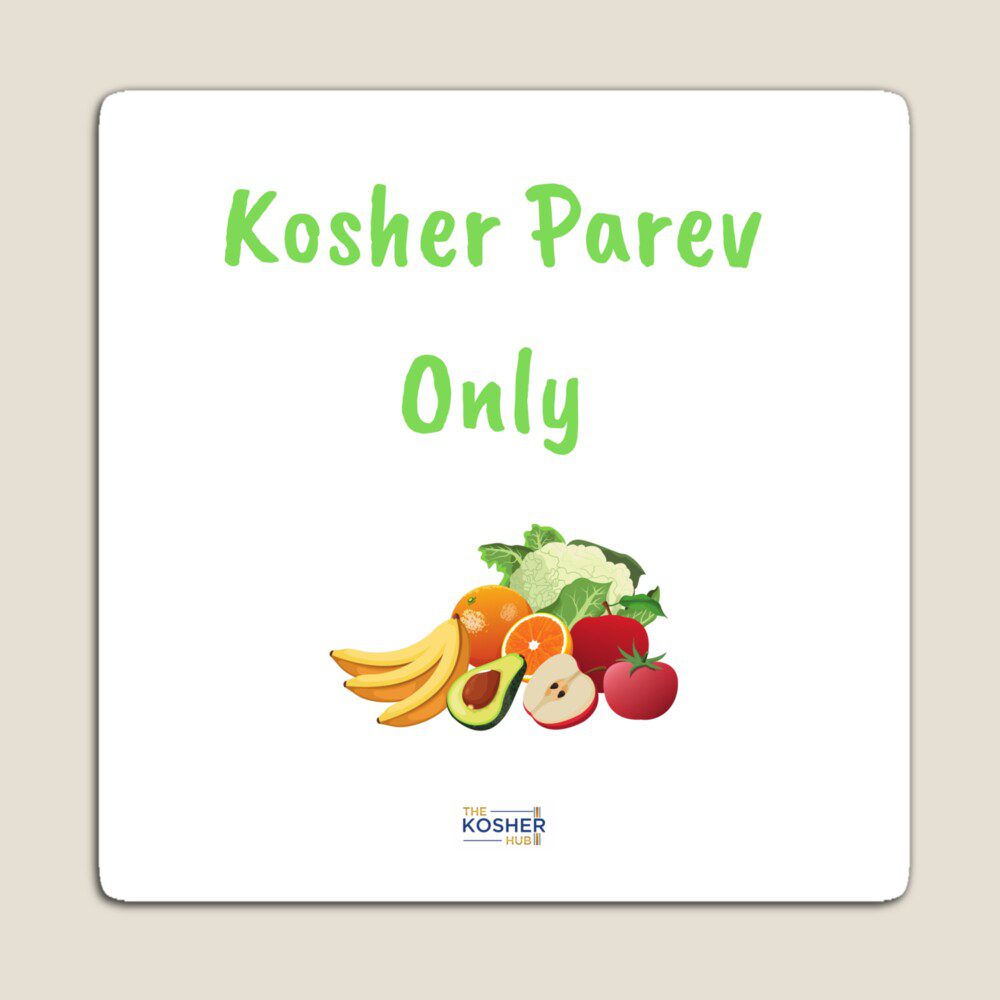
I designed these three magnets myself for anyone who wants a more permanent, decorative way to mark kosher zones — on the fridge door, a cabinet front, or a designated dairy or meat shelf — rather than a sticker meant for individual containers. They pair nicely with the sticker sets above: use the stickers for containers and cutting boards, and the magnets for the bigger, fixed spots in your kitchen that don't need to be dishwasher safe.
🏷️ The Kosher Cook Kitchen Stickers
A trusted kosher-kitchen brand's take on color coding.
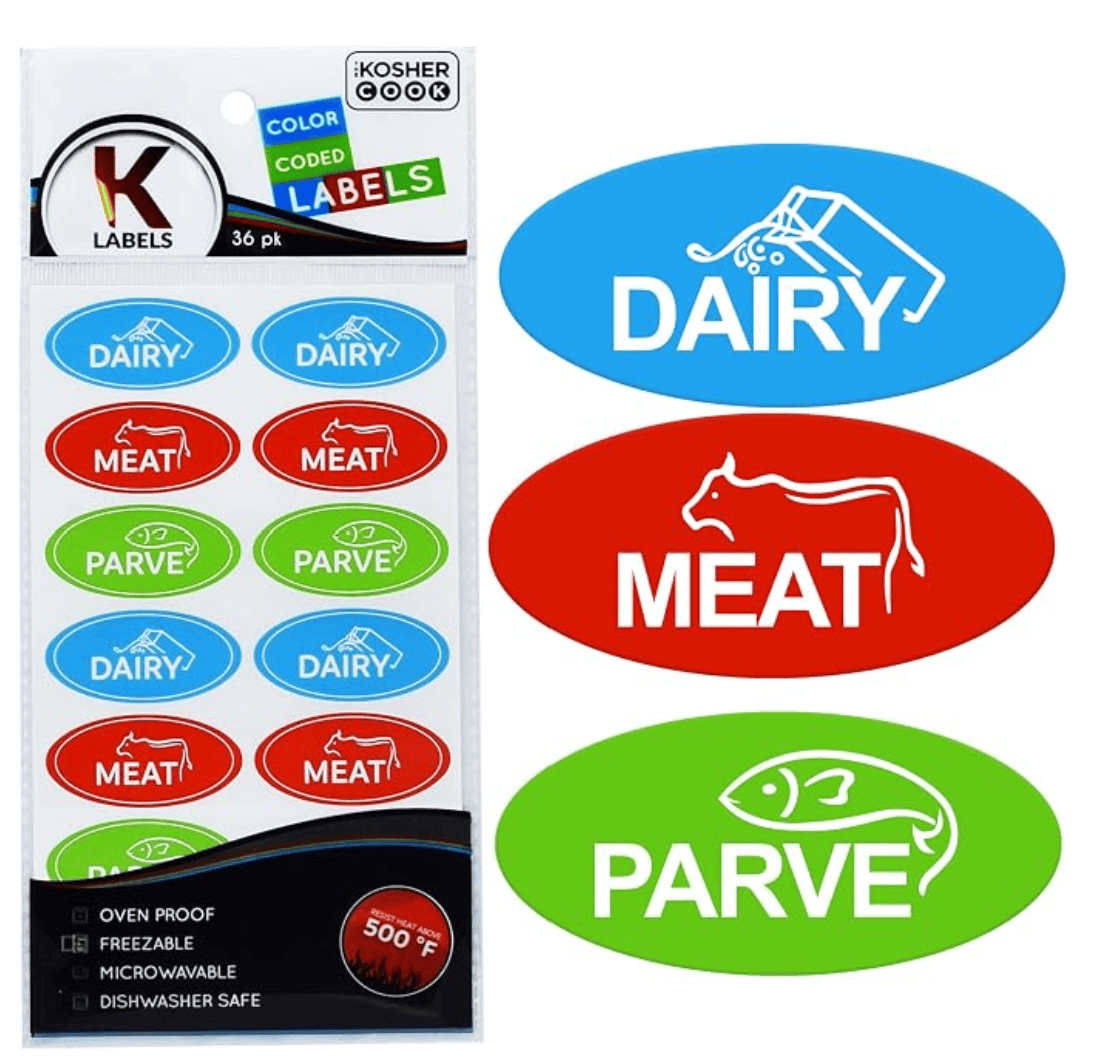
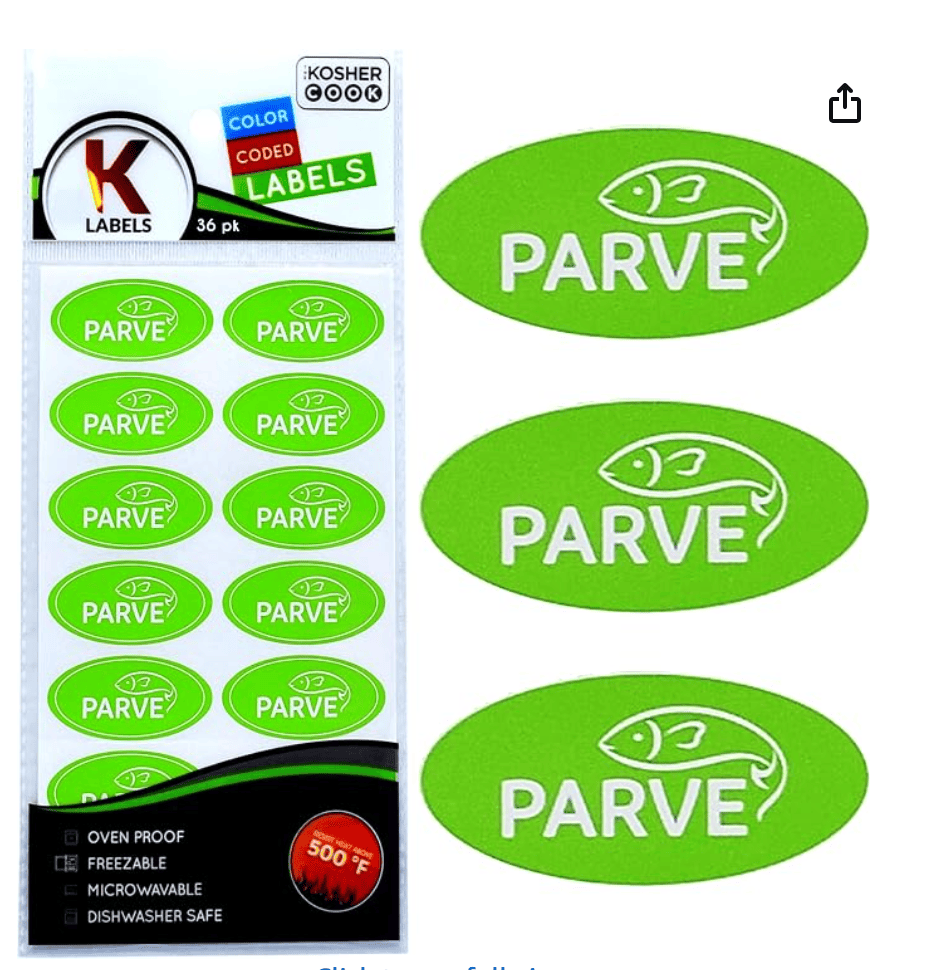
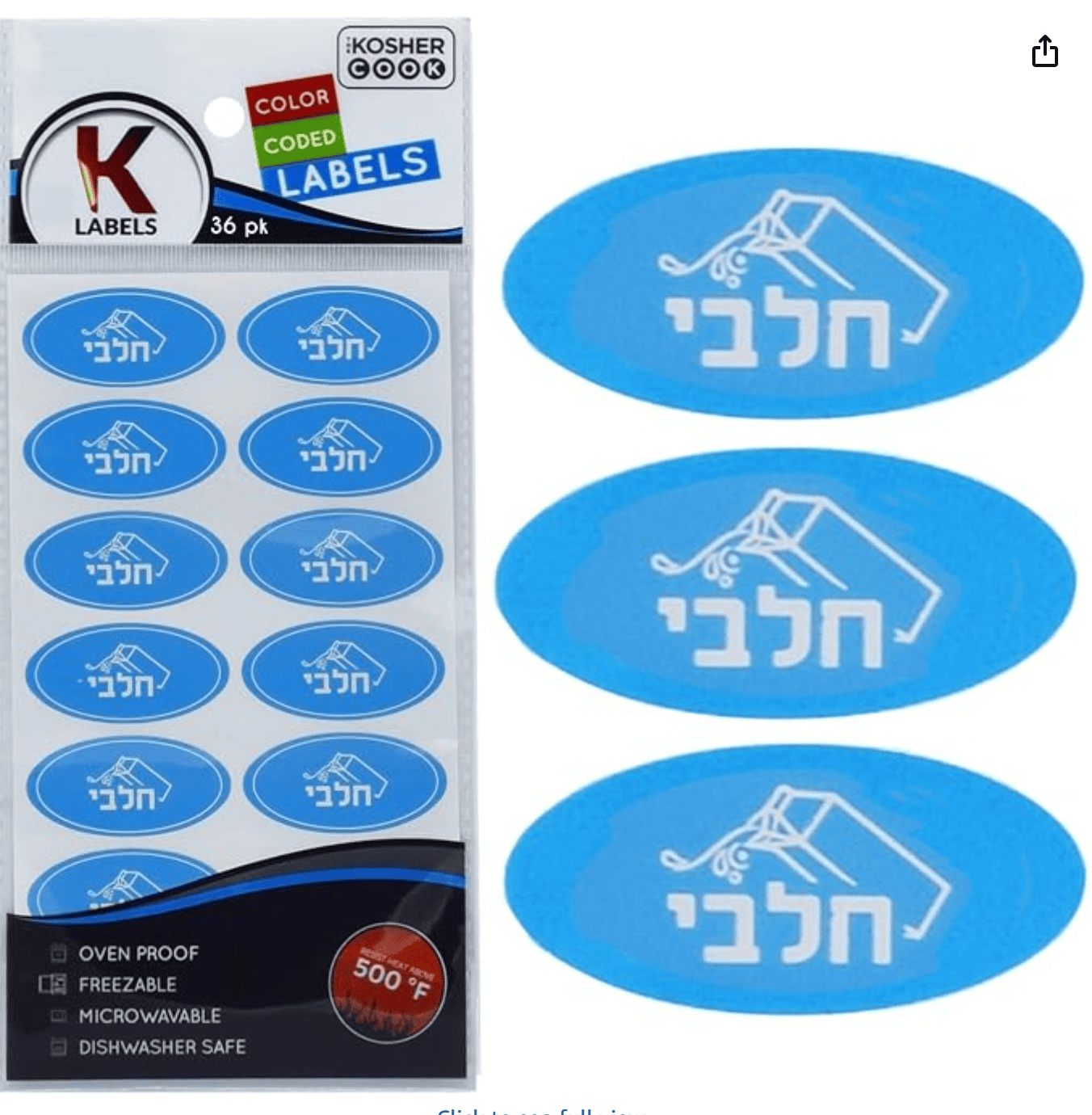
The Kosher Cook is one of the better-known names in kosher kitchen organization, and their labels follow the same color-coded system as the rest of my picks — with individual color packs available if you only need to restock one color rather than buying a full assorted set. That makes them a practical choice if your household goes through blue dairy labels faster than red or green, for instance, since you can top up just the color you're low on instead of buying a whole new assorted pack.

🔍 What to Look For in Kosher Labels
A few details make the difference between labels that last and ones that peel.
Color consistency: Stick to one system in your kitchen — most kosher households use red for meat, blue for dairy, and green for pareve. Mixing brands with different color schemes gets confusing fast, so it's worth buying enough of one set to cover your whole kitchen.
Dishwasher and freezer safety: Labels that go on containers, cutting boards, or pots need to survive repeated washes and temperature swings without peeling, fading, or leaving sticky residue behind. If you plan to label bakeware, check for an oven-safe rating too.
Language: Choose text that everyone in your household will recognize instantly — English, Hebrew, or Spanish — especially if you regularly have guests, sitters, or extended family cooking in your kitchen.
Quantity: A 108-label pack sounds like a lot, but once you start labeling everyday containers, mixing bowls, and cutting boards, they go quickly — sizing up saves you from reordering a few months in.

❓ Kosher Labels FAQ
What colors are used for kosher kitchen labels?
Most kosher households follow the same convention: red for meat (basari), blue for dairy (chalavi), and green for pareve. Sticking with this standard color system makes it easy for anyone in your home to follow at a glance.
Are kosher labels dishwasher safe?
Most of the sets featured here are designed to be dishwasher, freezer, and microwave safe, and some — like The Dreidel Company's labels — are also rated oven-safe. Checking the listing details before you buy is always a good idea if you plan to wash labeled items daily.
Can I use kosher labels on glass and plastic containers?
Yes — these stickers are designed to adhere to a range of surfaces including glass, plastic, and metal, which makes them useful for storage containers, jars, cutting boards, and small appliances.
Do kosher labels come in Hebrew?
Yes — Label Land's Hebrew-text set uses the same red, blue, and green color coding, so it functions exactly like the English version while displaying Hebrew text for meat, dairy, and pareve.
Are kosher labels the same thing as kosher certification stickers?
No — these labels are organizational tools for sorting meat, dairy, and pareve items in your own kitchen. They aren't a kosher certification and don't indicate that a product itself is certified kosher; certification always comes from a recognized Kashrut Authority.
How many kosher labels do I need for my kitchen?
It depends on how many containers, cutting boards, and small appliances you want to mark, but most households find a 108-label pack (36 of each color) covers the essentials with room to spare.
Are fridge magnets a good alternative to stickers?
Magnets work well for fixed spots like the fridge door or a cabinet front, since they don't need to survive the dishwasher. Stickers are still the better choice for individual containers, cutting boards, or anything that gets washed regularly.
What's the best way to organize a kosher kitchen besides labels?
Color-coded labels work especially well alongside color-coded utensils, cutting boards, and dish towels — using the same red/blue/green system across every tool in your kitchen makes it foolproof for anyone cooking alongside you.
The Kosher Hub is not a Kosher Authority. For any advice please refer to your local Kashrut Authority.
As an Amazon Affiliate we earn from qualifying purchases.








Understanding Our Kosher Certifications
The Kosher Hub references products certified by recognized kosher authorities, including OU, OK, Star-K, Kof-K, and CRC. Certification symbols and status can change, so always confirm the current kosher status directly on the product packaging or via the certifying agency's own listings before purchasing.