The Kosher Hub Home of all Things Jewish

kosher Pistachios

Are Pistachios Kosher for Passover?

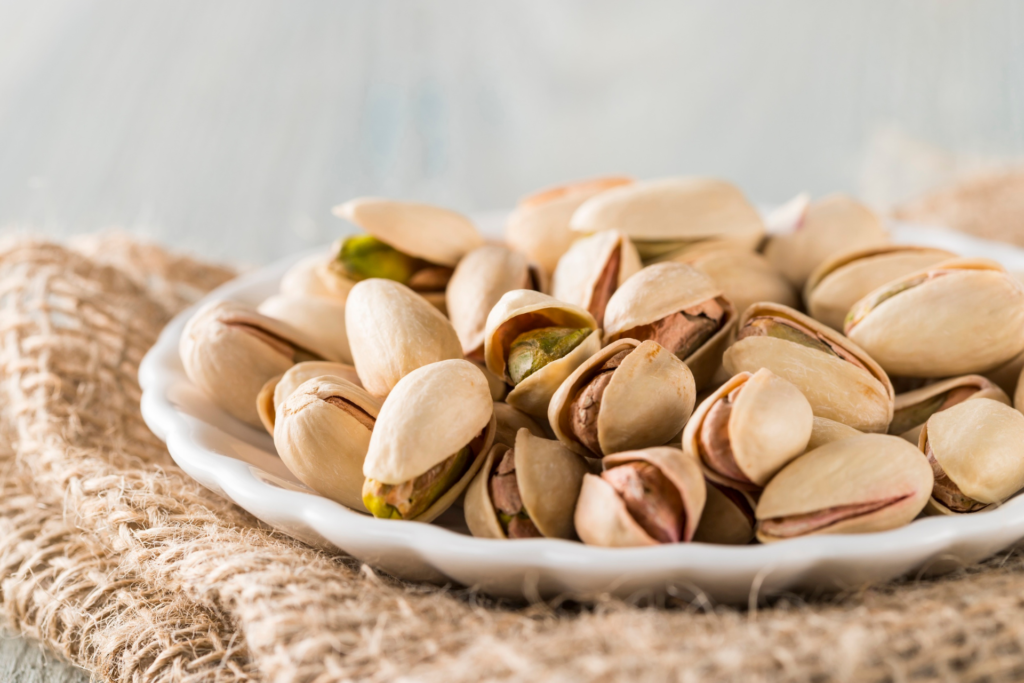
The short answer is: Yes, raw pistachios in their shell are generally considered Kosher for Passover without special certification.
However, once a pistachio has been shelled, roasted, salted, or flavored, the answer changes. Roasted or flavored pistachios must bear a reliable “Kosher for Passover” symbol (such as an OU-P, STAR-K P, or OK-P). This is because the processing equipment and additional ingredients used in roasting can introduce chametz or kitniyot risks that aren’t present in the raw, in-shell version of the nut.
 

Explanation of Whether it is Chametz or Kitniyot

To understand the Passover status of pistachios, we must first look at the categories of forbidden and restricted foods: chametz and kitniyot.
 

Why Pistachios are Not Chametz

Chametz refers to any food or drink containing even a trace of edible fermented grain products. This specifically includes five grains: wheat, barley, oats, spelt, and rye. When these grains come into contact with water and are not baked within 18 minutes, they leaven and become chametz.
Pistachios are tree nuts. They are not grains and do not belong to the grass family that produces wheat or barley. Therefore, a pistachio cannot naturally become chametz. This is why raw, unprocessed nuts in their shell are universally permitted; they have had no contact with water or grain-based leavening agents.

Are Pistachios Kitniyot?

Kitniyot is a category of food that includes “small things” like legumes, beans, peas, rice, millet, corn, and certain seeds. While not biblically prohibited like chametz, many Ashkenazi Jews avoid kitniyot because they can be ground into flour that resembles grain flour, or because they were historically stored alongside forbidden grains.
Pistachios are not classified as kitniyot. Unlike peanuts, which grow in the ground and are technically legumes (and thus considered kitniyot by most Ashkenazim), pistachios are true tree nuts. Because they do not share the botanical or historical concerns associated with kitniyot, they are permitted for consumption by all Jewish communities, provided they are processed correctly.

Ashkenazi vs. Sephardic Differences

While the status of the pistachio nut itself is a point of agreement, the traditions surrounding its preparation and the broader category of nuts can vary between Jewish ethnicities.
Ashkenazi Customs
Ashkenazi Jews, predominantly of Eastern European origin, strictly avoid kitniyot. This means while they can eat pistachios, they must be careful that the nuts were not roasted in oils that are considered kitniyot, such as soybean or canola oil. For Ashkenazim, the focus is on ensuring that the pistachio remains a “pure” nut, free from any additives or oils that might trigger a kitniyot or chametz concern.
 

Sephardic Customs

Sephardic Jews, generally from North Africa, the Middle East, and Spain, do not historically observe the prohibition of kitniyot. For these communities, rice and legumes are staples of the holiday. Consequently, a Sephardic Jew might be less concerned if a pistachio was roasted with kitniyot-based oils. However, Sephardic authorities still emphasize the need for caution regarding actual chametz. Even in Sephardic traditions, processed nuts require checking to ensure they weren’t produced on equipment shared with wheat-based snacks.
 

Modern Rabbinical Rulings

It is worth noting that some modern movements, including the Reform and Conservative movements, have ruled that both Ashkenazi and Sephardi Jews should be permitted to eat kitniyot during Passover. This change was intended to make the holiday more accessible and to promote a more varied, healthy diet. For those following these rulings, the distinction between nuts and legumes is largely symbolic.

Does it Require Passover Certification?

The need for a “Kosher for Passover” (OU-P) symbol depends entirely on the level of processing.
Raw, In-Shell Pistachios
If you purchase raw pistachios that are still in their hard shells, they do not require special Passover certification. They are considered a raw agricultural product.
Shelled Raw Pistachios
Once the shell is removed, the risk of cross-contamination increases. Major kashrus agencies, such as the OU and STAR-K, state that raw, shelled nuts are acceptable without a “P” symbol only if they list no additives on the ingredient label. Specifically, you must look for the absence of:
BHA and BHT: These are antioxidants used to preserve freshness, but they can be suspended in grain-derived carriers.
Oils: Any oil used to coat the nut introduces kitniyot or chametz risks.

Roasted and Flavored Pistachios

These always require a Kosher for Passover symbol. Roasting equipment is often shared with non-Passover products, such as wheat-coated snacks or seasoned crackers. Furthermore, the flavorings themselves frequently contain maltodextrin (which can be derived from wheat) or other grain-based starches. Without a reliable “P” certification, there is no way to guarantee the equipment was scoured and purged of chametz before the Passover run.

Common Mistakes People Make

Even with a seemingly simple food like nuts, there are several common errors that can compromise a Kosher for Passover kitchen:
1. Confusing “Gluten-Free” with “Chametz-Free”: Many people assume that because pistachios are gluten-free, they are safe for Passover. This is a mistake. A product can be gluten-free but still contain wheat-derived ingredients like ethanol or vinegar, or be processed on equipment that handles leavened grains.
2. Using Year-Round Bags: If you have an open bag of pistachios in your pantry that you’ve been eating from all year, do not use it for Passover. There is a high likelihood of cross-contamination from breadcrumbs, crackers, or other chametz snacks that may have been touched or eaten simultaneously.
3. Buying from Bulk Bins: Never buy nuts for Passover from open bulk bins at the grocery store. The scoops are shared between bins, and flour dust from nearby grain bins can easily contaminate the nuts.
4. Ignoring Additives: Shelled nuts often contain BHA or BHT. While these look like minor ingredients, they require the product to have a Passover-specific certification.
5. Assuming All Roasting is “Dry”: Even “dry-roasted” nuts can involve processing aids that are problematic for Passover. Always look for the certification on any roasted nut.

FAQ Section

1. Can I use pistachio flour for Passover baking?
Finely ground nuts, such as pistachio or almond flour, require a specific “Kosher for Passover” certification. This is because the milling equipment is at high risk for cross-contamination with wheat flour.
2. Are salted pistachios okay without a “P”?
If the pistachios are raw and in the shell, salt is generally not an issue. However, most salted pistachios are roasted to get the salt to stick. If they are roasted or contain any additives, they need a Passover symbol.
3. Why is peanut oil different from other nut products?
Peanuts are classified as kitniyot because they are legumes. While major agencies used to certify peanut oil for Passover, many (including the OU) no longer do because of concerns about shared equipment and the varying customs of different communities.
4. Is it better to buy nuts before Passover starts?
For certain items like eggs or milk, purchasing them before the holiday allows for certain minor chametz risks to be “nullified” (batel). For nuts, the best practice is simply to buy the correct raw or certified version to avoid any doubt.
5. Can I eat pistachios if I am gluten-intolerant?
Yes, pistachios are a great gluten-free option for the holiday. Just ensure they are certified Kosher for Passover to avoid the hidden grain-based ingredients often found in processed snacks.
Passover Parting of the Sea Dress
Parting of the Sea Passover Dress
Passover Matzah Dress
Matzah Dress
Seder Plate Passover Dress
Seder Plate Dress
Torah Scroll and Matzah Passover Dress
Torah Scroll and Matzah Dress

Our Passover Posts

KFP Frosting
Kosher for Passover Frosting
Kosher for Passover frosting can be used to decorate cakes, cupcakes, and cookies during the holiday,...
KFP Coconut Flour
Kosher for Passover Flour
During Passover, traditional wheat flour cannot be used because it is made from grains that become chametz....
KFP Egg Noodles
Kosher for Passover Egg Noodles
Egg noodles are usually not Kosher for Passover when they are made from traditional wheat flour, which...
KFP Dessert
Kosher for Passover Desserts
Passover desserts can still be rich and delicious even without traditional flour. Many recipes use ingredients...
KFP coffee
Kosher for Passover Coffee
Coffee is generally permitted during Passover, but it is important to check how the coffee is processed...
KFP cereal
Kosher for Passover Cereal
Cereal is one of the trickier foods during Passover because most breakfast cereals are made from wheat,...
KFP cookies
Kosher for Passover Cookies
Cookies can still be enjoyed during Passover, but they must be made without traditional wheat flour or...
KFP Brownies
Kosher for Passover Brownies
Brownies can absolutely be enjoyed during Passover, but they must be made without traditional wheat flour...
KFP Birthday Cake
Kosher for Passover Birthday Cake
Celebrating a birthday during Passover can be a little tricky because traditional cakes rely on wheat...
KFP Almond Milk
Kosher for Passover Almond Milk
Almond milk is sometimes used during Passover as a dairy-free alternative and works well in coffee, smoothies,...